
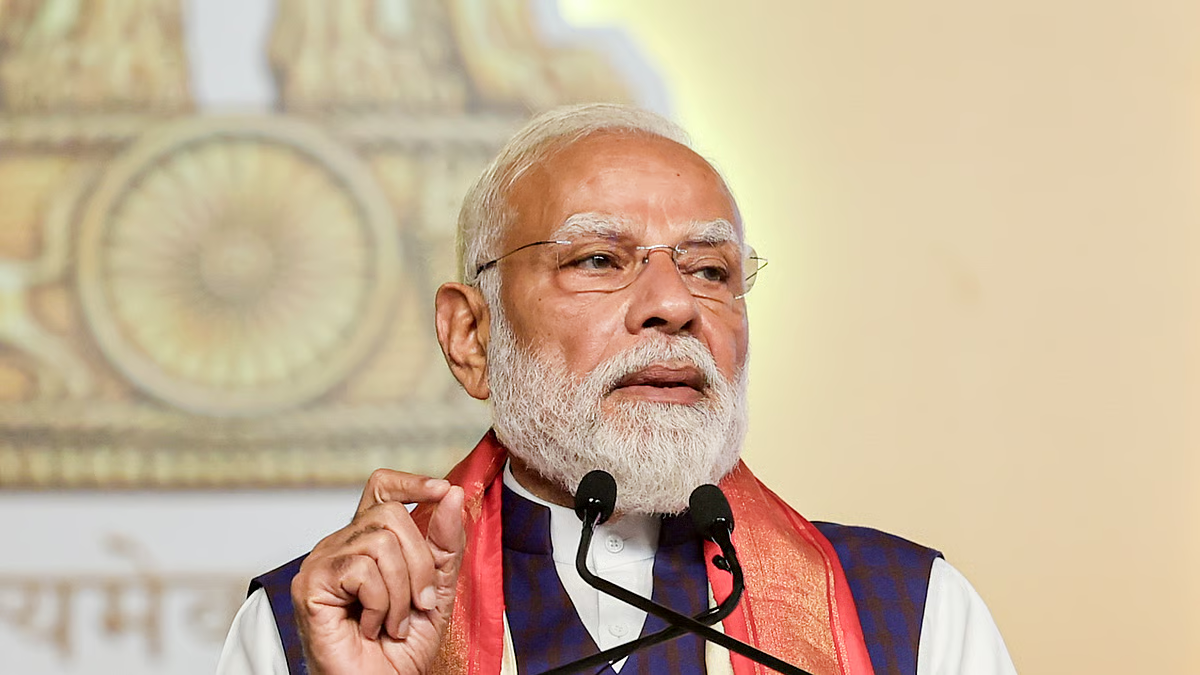


PM Modi Calls on Indians to Cut Fuel Use and Avoid Excess Gold Buying
In a decisive move to shield the nation from global turbulence, Prime Minister Narendra Modi has issued a strong appeal to citizens to adopt a “nation-first” approach to consumption. As the Middle East conflict pushes global oil prices above $100, the Prime Minister is urging a reduction in fuel and fertilizer use while advising against non-essential spending on foreign travel and gold.
This strategic signal is designed to conserve India’s foreign exchange reserves and stabilize the rupee, which has faced significant pressure as the weakest-performing Asian currency so far in 2026.
Table of Contents
ToggleThe Strategic Drive to Protect India’s Forex Reserves
The surge in oil prices triggered by international conflicts has intensified pressure on the national currency, leading the Reserve Bank of India to actively sell dollars to maintain stability. With India depending on imports for nearly 90% of its oil requirements, every $10 increase in crude prices adds approximately $13–14 billion to the national import bill.
PM Modi’s call to conserve foreign exchange is a preemptive strike against economic strain, signaling that the collective discipline of citizens can act as a powerful buffer against global market volatility.

A Return to Flexible Work to Curb Energy Demand
Government officials are currently evaluating guidance to encourage work-from-home arrangements for sectors where physical presence is not a necessity. This initiative aims to directly reduce daily fuel consumption and ease the burden on transportation infrastructure during this period of supply disruption.
Major business groups, including Tata Group and Reliance Industries, have already begun reviewing their workplace policies to incorporate more flexible models in response to rising energy costs.
Stabilizing the Rupee through Market Intervention
- The Reserve Bank of India is tightening oversight on rupee arbitrage trades to curb speculative activity that weakens the currency.
- Authorities are exploring various steps to boost dollar inflows, including potential schemes aimed at attracting deposits from the Indian diaspora.
- The central bank has encouraged oil refiners to utilize special credit facilities to manage their foreign exchange requirements without stressing the spot market.
- While interest rate hikes remain a traditional tool for currency defense, economists suggest the government prefers other stabilization methods to protect economic growth.

Consultations with India Inc on Economic Resilience
- The Finance Ministry has initiated high-level internal discussions to evaluate a range of options to address the West Asia conflict’s impact.
- Formal consultations with industry representatives and stakeholders are expected to begin soon to finalize measures that support the economy.
- Officials have clarified that they are avoiding “abrupt measures” that could unsettle market sentiment or discourage international investors.
- Despite the pressure on forex, there are currently no plans to restrict outward remittances under the Liberalised Remittance Scheme to maintain investor confidence.
Leveraging Global Capital and Diaspora Support
Historically, India has successfully navigated currency crises by launching initiatives like the Resurgent India Bonds to attract overseas investment. Policymakers may again look toward non-resident Indians (NRIs) by offering concessional swap windows to encourage foreign currency deposits, similar to the 2013 strategy that secured $26 billion.
Additionally, the government is considering easing norms related to foreign portfolio investments and external commercial borrowings to ensure a steady stream of dollar inflows during this volatile period.
Balancing Import Restraints and Domestic Pricing
To reduce the demand for dollars, the government has the option to increase import duties on non-essential goods, as seen with gold in previous years, though no such move is currently under consideration.
The domestic pricing of fuel also remains a critical point of focus, as oil marketing companies have been absorbing losses while global crude remains elevated.
While the government has previously cut excise duties to help citizens, analysts suggest that a gradual adjustment in petrol and diesel prices may eventually be required if international energy costs do not subside.
Author: M Jyosri
Union Health Ministry Activates Precautionary Hantavirus Surveillance Following Cruise Ship Outbreak
Union Health Ministry Activates Precautionary Hantavirus Surveillance Following Cruise Ship Outbreak The Union Health Ministry has officially activated high-level surveillance […]
Suvendu Adhikari Set to Become West Bengal Chief Minister In a historic turning point for eastern Indian politics, Suvendu Adhikari […]
Suvendu Adhikari PA Shot Dead as Post Election Violence Grips West Bengal The post-election atmosphere in West Bengal has turned […]
NEET-UG 2026 Cancelled: Nationwide Outrage as Nashik Police Arrest Key Accused The NEET-UG 2026 examination has been officially cancelled following […]

Is Your Family Eligible for Free Treatment Under Ayushman Bharat PM-JAY? Healthcare expenses can become a major financial burden for […]

Google I/O 2026 Announcements: What’s Coming and Why It Matters? Every year, Google I/O sets the tone for where tech […]


