

Union Health Ministry Activates Precautionary Hantavirus Surveillance Following Cruise Ship Outbreak

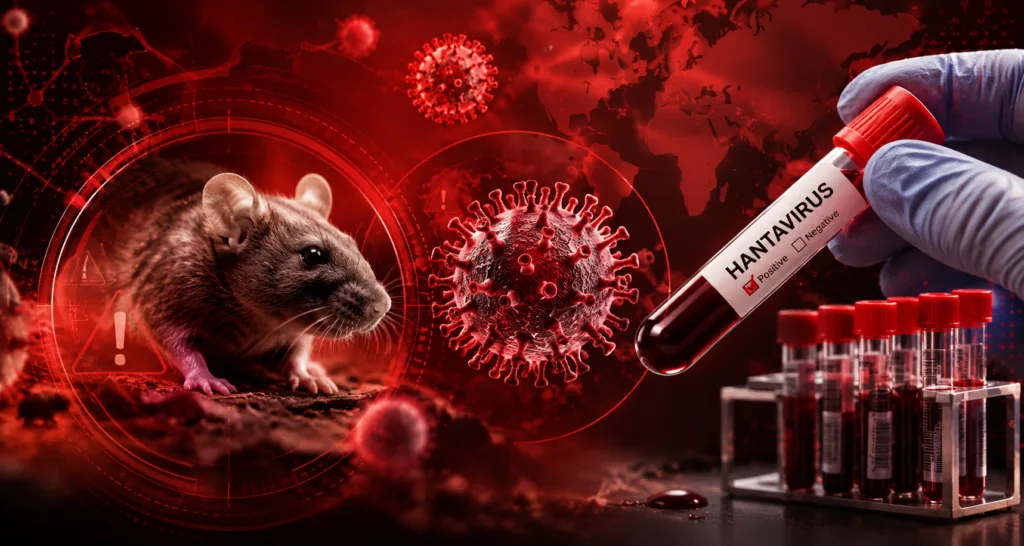
The Union Health Ministry has officially activated high-level surveillance and monitoring mechanisms in response to a hantavirus outbreak reported onboard the cruise ship MV Hondius. While international health authorities, including the World Health Organization (WHO), have assessed the global public health risk as “low,” Indian officials are taking proactive steps to ensure national preparedness. The virus involved has been identified as the Andes strain, which is primarily known for limited human-to-human transmission.

The Ministry’s decision comes after preliminary reports confirmed a cluster of infections on the vessel, which was traveling from Argentina toward the Canary Islands. The situation is being monitored in close coordination with the National Centre for Disease Control (NCDC), the Integrated Disease Surveillance Programme (IDSP), and international partners to prevent any potential spread and safeguard citizens.

Indian Nationals Onboard Under Observation

The Union Health Ministry has confirmed that two Indian nationals are currently onboard the MV Hondius. According to the latest reports through International Health Regulations (IHR) channels:

  • Both Indian individuals are presently asymptomatic (showing no symptoms).
  • They are being monitored under established international health protocols.
Hantavirus Surveillance India
  • The Ministry remains in constant communication with the WHO regarding their welfare and potential disembarkation plans.
  • Diagnostic support and epidemiological assessments are being facilitated for all passengers as the ship continues its journey.

Details of the MV Hondius Hantavirus Outbreak

  • A total of eight probable cases of hantavirus have been reported onboard the vessel.
  • Five of these cases have been laboratory-confirmed, while three deaths have been reported.
  • The outbreak began following a voyage from Ushuaia, Argentina, which started on April 1, 2026.
  • Symptoms reported among affected passengers include fever, gastrointestinal issues, and rapid progression to severe respiratory distress.
  • The WHO was formally notified in the first week of May after deaths were reported in South Africa and on the ship itself.

Understanding the Andes Strain of Hantavirus

The World Health Organization has specified that the outbreak involves the Andes hantavirus strain. Unlike many other hantaviruses that are only spread via rodent-to-human contact, the Andes strain has a documented, albeit limited, capability for human-to-human transmission. This typically requires close and prolonged personal contact. Because the virus has a relatively long incubation period—potentially up to 45 days—authorities expect that additional cases could emerge among those already exposed on the ship.

Hantavirus Surveillance India

National Preparedness and Surveillance Measures

The Public Health Emergency Operations Centre (PHEOC) recently convened a high-level review meeting to assess India’s readiness. Senior officials from the IDSP and the IHR National Focal Point (NFP) participated in the briefing. Key actions include:

  • Activation of the Integrated Disease Surveillance Programme (IDSP) for real-time monitoring.
  • Strengthening diagnostic and testing capabilities at NCDC facilities.
  • Coordination with the WHO Emergency Medical Team (EMT) for clinical management advice.
  • Issuing advisories for any travelers who may have had contact with the vessel or its passengers in international ports.
Global Risk Assessment and International Response

Despite the deaths and the specific nature of the Andes strain, the WHO maintains that the risk to the general global population remains low. International response measures are focused on safe disembarkation and ensuring that symptomatic individuals receive intensive medical care.

The vessel was recently moored off the coast of Cabo Verde after being refused docking privileges in some ports, and plans are being made for it to proceed to the Canary Islands for further medical assessment.

Preventive Advice for Travelers

The Health Ministry and international agencies recommend that travelers, particularly those on cruises or visiting ecologically diverse regions, maintain high hygiene standards. This includes:

  • Avoiding contact with rodents or areas where rodent activity is high.
  • Storing food in rodent-proof containers.
  • Seeking immediate medical attention if symptoms like fever, muscle aches, or shortness of breath develop after travel.

Informing healthcare providers of recent travel history, especially if it involves international shipping or South American regions


Author: M Jyosri

Sea Buckthorn Benefits

Sea Buckthorn Juice: Daily Health Booster or Overhyped Trend? People are becoming more health-conscious today than ever. Sea buckthorn juice […]

Instagram Carousel Reorder

Stop Deleting Posts With The New Instagram Carousel Reorder Feature If you have ever posted a carousel on Instagram only […]

Christina Applegate Health

Christina Applegate’s Hospitalization Sparks That There Might Not Have Tomorrow Most of us go through life assuming tomorrow will come. […]

Suvendu Adhikari PA Shot Dead

Suvendu Adhikari PA Shot Dead as Post Election Violence Grips West Bengal The post-election atmosphere in West Bengal has turned […]

Nora Fatehi Sarke Chunar Apology

Nora Fatehi Issues Public Apology and Pledges to Sponsor Education for Orphan Girls In a significant development regarding the controversial […]
US Naval Blockade Iran

Tensions Hit New Peak in the Gulf as Sanctioned Tankers Navigate US Blockade Perimeters The maritime standoff in the Gulf […]

Scroll to Top