
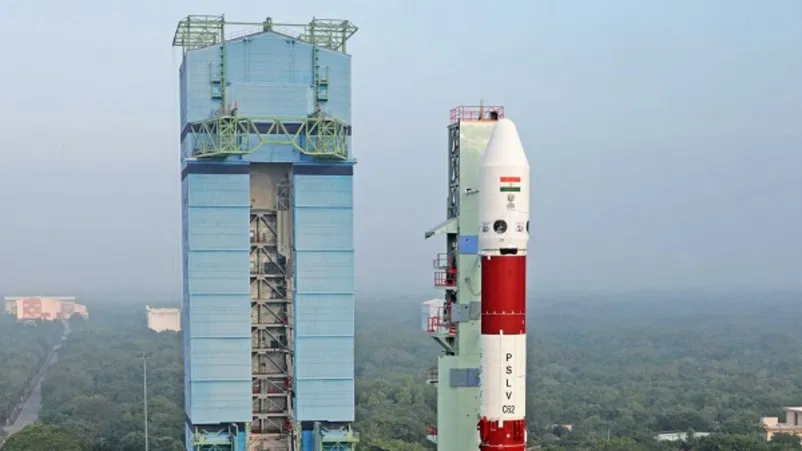
PSLV Mission Draws Attention After In-Flight Observation

India’s Polar Satellite Launch Vehicle (PSLV) experienced an unexpected development during its latest mission on Monday, as the PSLV rocket deviated from its flight path near the end of its third stage. The Indian Space Research Organisation (ISRO) has confirmed the observation and stated that mission data is currently under detailed analysis.

The space agency has not yet classified the mission as either a success or a failure, emphasising that a full assessment is still underway.

PSLV-C62 Mission Launched From Sriharikota

ISRO Confirms Deviation During Third Stage

ISRO Chairman Dr V Narayanan confirmed that the launch vehicle performed as expected until close to the completion of the third stage (PS3). However, towards the end of this phase, the rocket showed increased roll disturbances.

“Close to the end of the third stage, we are seeing slightly higher disturbance in the vehicle roll rates, and subsequently a deviation was observed in the flight path. We are analysing the data and will share details at the earliest,” Dr Narayanan said.

ISRO officials have stated that conclusions will be drawn only after a comprehensive evaluation of the telemetry and onboard data.

PSLV Mission

The EOS-N1 Satellite Mission

The EOS-N1 is an Earth observation satellite designed primarily for strategic and commercial applications. The mission is operated commercially by NewSpace India Limited (NSIL).

EOS-N1, along with 15 co-passenger satellites, was planned to be placed into a Sun Synchronous Orbit, allowing consistent imaging conditions for Earth observation.

PSLV Mission

Anvesha Satellite Strengthens Surveillance Capability

Among the satellites onboard was Anvesha, a surveillance satellite developed by the Defence Research and Development Organisation (DRDO). The satellite is designed to provide advanced imaging capabilities, supporting accurate monitoring and mapping of strategic locations.

This satellite plays a role in enhancing India’s observation and reconnaissance infrastructure.

Private Sector Milestone in Indian Spaceflight

The mission also highlighted the growing role of private companies in India’s space ecosystem. Dhruva Space, a Hyderabad-based private firm, contributed seven satellites to the PSLV-C62 mission.

This marked the first time a single Indian private company supplied such a large number of satellites for a PSLV launch, reflecting increased participation from startups and academic institutions.

Details of Co-Passenger Satellites

The PSLV-C62 mission carried 15 co-passenger satellites developed by organisations from India and abroad, highlighting the collaboration between private companies, academic institutions, and international partners. Several of the satellites were contributed by Dhruva Space from India, including CGUSAT, DSUSAT, MOI-1 (in collaboration with Takeme2Space), LACHIT, and Thybolt-3 (in partnership with Don Bosco University).

Among the Indian satellites was Anvesha, a surveillance satellite developed by DRDO designed to provide advanced imaging capabilities for monitoring and mapping strategic locations. The mission also included satellites from international organisations, such as Theos-2, developed jointly by Thailand and the UK, and Munal, from Nepal.

The mission featured the Kestrel Initial Demonstrator (KID) satellite, developed by Orbital Paradigm (Spain) and RIDE! (France), which was planned for a re-entry trajectory after deployment, with controlled re-entry into the Earth’s atmosphere over the South Pacific Ocean. Other international satellites included Edusat, Uaisat, Galaxy Explorer, Orbital Temple, and Aldebaran-1 from AlltoSpace (Brazil and other partners). Additionally, the mission carried Sanskarsat from Laxman Gyanpith (India) and AyulSat from OrbitAid (India).

This diverse set of co-passenger satellites reflects the growing participation of India’s private space sector, academic institutions, and international partners, marking a significant step in collaborative space missions.

The mission carried satellites developed by organisations from India and abroad, including:

  • Satellites by Dhruva Space (India)
  • Academic satellites from India and Nepal
  • Commercial satellites from Thailand, the UK, Brazil, Spain, and France

The Kestrel Initial Demonstrator (KID) satellite was planned for a re-entry trajectory after deployment, with controlled re-entry into Earth’s atmosphere over the South Pacific Ocean.

Looking Back: Previous PSLV Flight Challenges

This mission follows the PSLV-C61 launch in May 2025, during which ISRO encountered an issue in the third stage while attempting to place the EOS-09 satellite into orbit.

The PSLV-C62 mission was therefore closely watched, as ISRO continues to strengthen reliability and performance across its launch vehicles.

ISRO Yet to Declare Mission Outcome

At present, ISRO has not announced whether the mission objectives were fully achieved. Officials have reiterated that data analysis is ongoing, and more clarity will be provided once the evaluation is complete.

ISRO’s cautious and transparent approach reflects its standard protocol of sharing confirmed information only after thorough verification.

Conclusion

The PSLV rocket deviating from its flight path during the EOS-N1 mission represents a significant technical observation for ISRO. While the launch progressed smoothly through most phases, the deviation near the end of the third stage has prompted careful review.

As ISRO analyses the data, further updates are expected to clarify the mission’s final outcome and any corrective measures for future launches.

Michael Carroll

The Rise and Fall of Michael Carroll: A Lottery Winner’s Journey In 2002, Michael Carroll’s life dramatically transformed when he […]

effect of organic farming on climate change

The Effect of Organic Farming on Climate Change From lowering greenhouse gas emissions to building resilience against extreme weather events, […]

healthy eating habits in kids

Kids and Nutrition: Why Healthy Eating Habits in Kids Matter Early Children learn by watching, tasting, and repeating. From their […]

plant-based diet

Plant-Based Power: Nutrition Benefits of Going Green Adopting a plant-based diet is more than a personal health choice, it is […]

Food–Nutrition Connection

From Farm to Plate: Understanding the Food–Nutrition Connection We often focus on what we eat, but rarely think about where […]

role of nutrition

Role of Nutrition: Preventing Diabetes & High Blood Pressure Diabetes and high blood pressure are two of the most common […]

Scroll to Top