
In response to growing media speculation, Mahindra & Mahindra (M&M) has clarified that there are no current plans for a Mahindra demerger between its auto and tractor businesses. The statement came after The Economic Times reported that internal evaluations were underway to separate Mahindra’s tractor, truck, and SUV divisions into independent entities—mirroring the Tata Motors demerger strategy.
According to the report, early internal discussions were taking place to review the feasibility and potential outcomes of such a corporate move. However, M&M has officially denied any such plan, emphasizing the value of business synergies that come from keeping its automotive and farm equipment divisions under one entity.
In a stock exchange filing, the company stated, “There is no plan for a demerger of the auto and tractor businesses. The company has clarified this in the past and maintains that it sees much greater value from synergies by keeping these businesses within the M&M entity.”

Understanding the Mahindra Demerger Speculation
The buzz around a potential Mahindra demerger comes amid the success of its automotive and farm equipment divisions, both of which have grown significantly in recent years. Analysts believe that if M&M were to eventually consider such a move, it could unlock substantial shareholder value, similar to what Tata Motors expects from its demerger.
M&M has evolved from a traditional tractor maker into a dominant player in India’s SUV market. Over the past five years, its consolidated financial performance has soared, reflecting robust product demand and market expansion.
M&M’s Growth Story: From Tractors to SUVs
M&M’s consolidated net profit climbed from ₹1,812.49 crore in FY21 to ₹12,929.10 crore in FY25, while revenue from operations more than doubled—from ₹72,679 crore in FY21 to ₹1,55,645 crore in FY25.
In FY21, the company’s automotive and farm equipment segments contributed nearly equally to total revenue—35% and 33% respectively. However, the landscape has shifted dramatically: by FY25, SUVs accounted for 57% of Mahindra’s revenue, while tractors contributed 22%.
This transformation underscores how M&M has successfully capitalized on the SUV boom sweeping India, now the world’s third-largest car market by production.
In fact, SUV sales surged fourfold—from 190,000 units in FY21 to 550,000 units in FY25. Tractor sales, too, witnessed steady growth, rising nearly 20% to 424,000 units during the same period.
Why a Mahindra Demerger Could Unlock Value
Although M&M has denied any immediate demerger plans, market observers point out that structural separation of its businesses could yield potential value unlocking for investors.
The company’s tractor business remains India’s market leader, with a strong rural footprint and high margins. Meanwhile, the SUV division has evolved into a high-revenue generator with popular models like the Thar, XUV700, and Scorpio-N driving demand.
Analysts suggest that independent entities could attract more focused investors, improved capital allocation, and better brand positioning—especially as global markets increasingly prefer specialized, agile corporate structures.
However, M&M believes that synergies between its divisions—in areas such as engineering, technology, and supply chain management—offer more long-term strategic value than a split.
The Tata Motors Demerger Context
The Tata Motors demerger, often cited in discussions around M&M, is seen as a benchmark for restructuring large Indian conglomerates. Tata Motors is set to list two separate entities—one for its commercial vehicle business and another for passenger and electric vehicles.

This strategic move is expected to enhance operational efficiency, streamline decision-making, and unlock hidden value for shareholders. For every Tata Motors share, investors will receive one share of the new entity—TML Commercial Vehicles Ltd. The record date for this demerger is October 14.
The development has prompted speculation that other diversified automakers, like Mahindra & Mahindra, could consider a similar route. However, M&M’s management remains firm on its integrated business model approach.
Market Outlook and Investor Sentiment
Following the news of the Mahindra demerger speculation, M&M’s shares saw brief volatility as investors reacted to both the report and the company’s clarification. Market analysts believe that while the idea of demerger-driven value unlocking is appealing, Mahindra’s integrated growth model continues to deliver strong financial results, reducing the immediate need for structural separation.
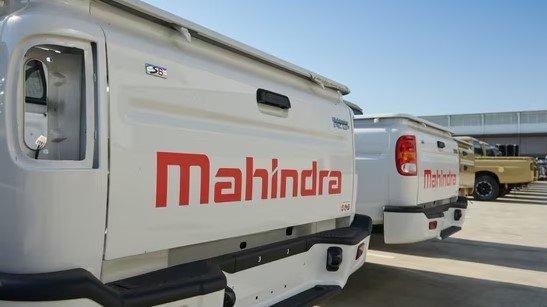
The company’s recent performance—driven by record-breaking SUV sales, successful electric vehicle launches, and consistent tractor demand—shows that diversification within one entity can still create sustainable value.
Additionally, M&M’s growing focus on EV manufacturing, technology integration, and rural electrification initiatives positions it well for future expansion without requiring a breakup.
Conclusion: Mahindra Demerger Still a Distant Possibility
While the Mahindra demerger rumor generated significant market chatter, the company’s official stance remains clear—no demerger is planned. M&M continues to emphasize its integrated operational strategy, leveraging the synergy between its automotive and tractor divisions to maximize innovation, cost efficiency, and growth.
However, industry experts say that as India’s auto landscape evolves—with increasing investor demand for transparency and specialized focus—corporate restructuring may resurface as a topic of discussion in the long run.
For now, though, Mahindra’s strong performance across both segments suggests that unity, not division, remains its driving force.