
India and New Zealand Sign Historic Once-in-a-Generation Trade Deal

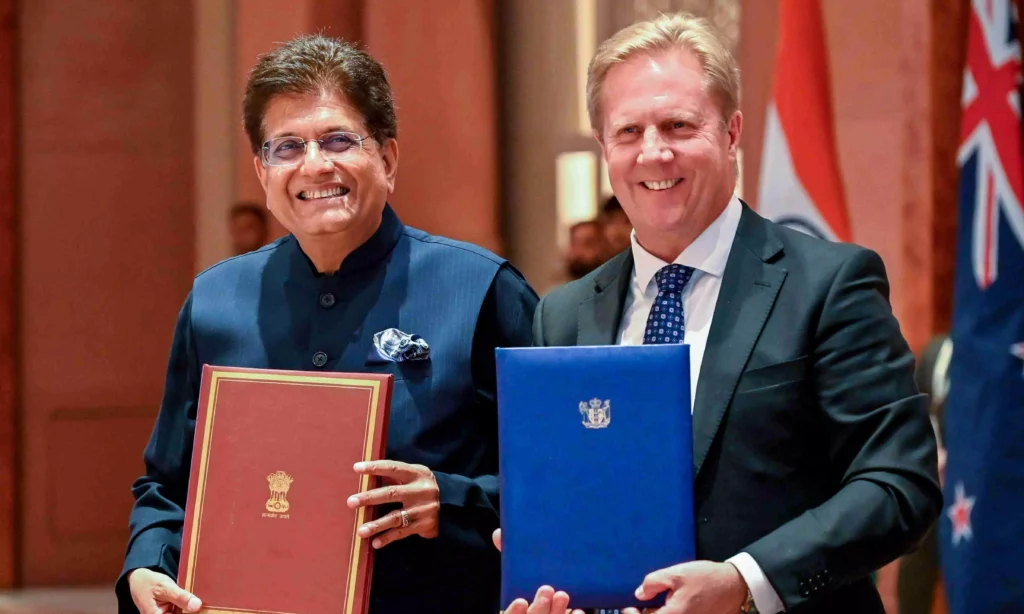
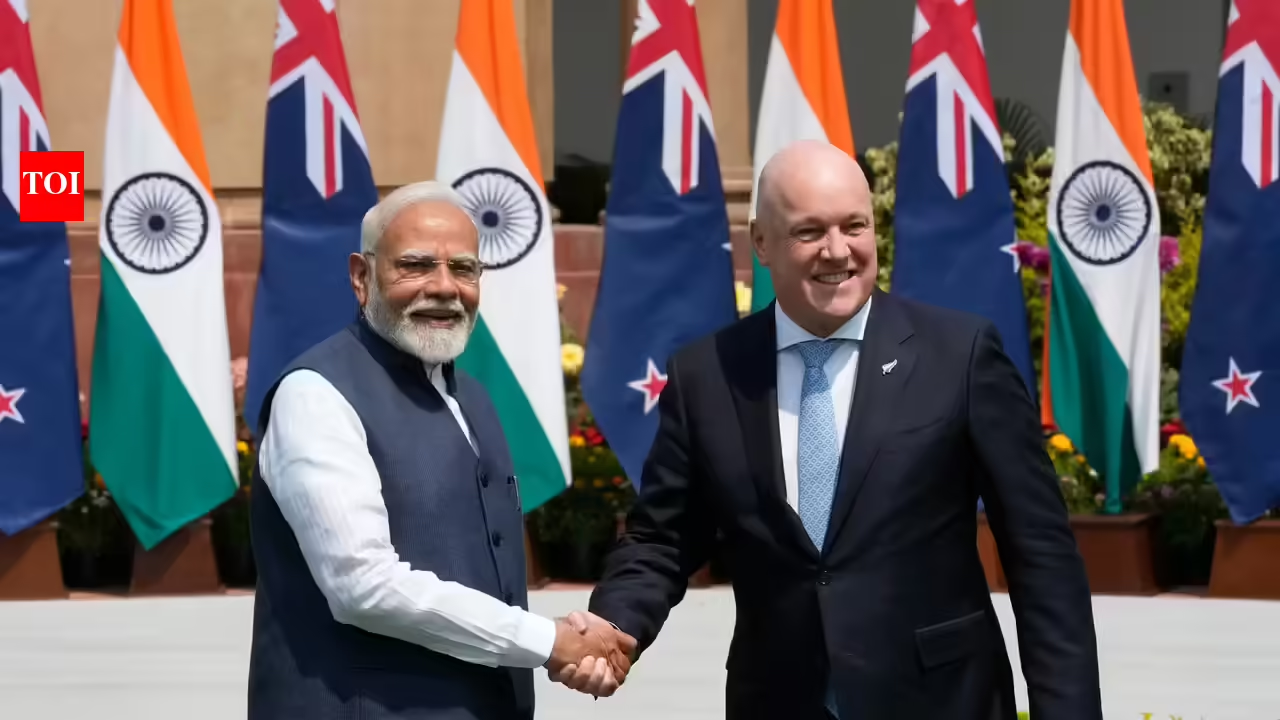
In a monumental development for the global economy, India and New Zealand have officially signed a comprehensive Free Trade Agreement on April 27, 2026. Finalized in Delhi by Commerce and Industry Minister Piyush Goyal and New Zealand’s Trade and Investment Minister Todd McClay, this historic pact marks a new chapter in bilateral cooperation. By eliminating trade barriers and creating robust economic synergies, the deal aims to double the current bilateral trade volume to five billion dollars within the next five years.

The agreement stands as a testament to the deepening strategic ties between New Delhi and Wellington. After concluding negotiations in just nine months across five rounds, the deal provides policy certainty and guaranteed market access, acting as a powerful catalyst for growth. As both nations move toward ratification, the pact promises substantial advantages for farmers, artisans, MSMEs, students, and technology innovators across both countries.

Long-Term Investment and Strategic Cooperation

The India New Zealand FTA introduces a transformative investment framework intended to drive sustainable bilateral growth. A core feature of this commitment is the pledge to facilitate 20 billion dollars in investment into India over the next 15 years.

This capital is slated for high-impact sectors including agri-technology, food processing, industrial manufacturing, logistics, and digital services, positioning India as a primary destination for Kiwi strategic capital.

India New Zealand FTA

Tariff Liberalization and Market Access

  • New Zealand provides 100 percent duty-free access to all Indian exports, immediately eliminating tariffs on thousands of goods including textiles, leather, footwear, and engineering products.
  • India has agreed to open approximately 70 percent of its tariff lines, representing 95 percent of bilateral trade value, ensuring a competitive and balanced market environment.
  • The agreement employs a structured phased reduction schedule for tariffs over 3, 5, 7, and 10 years, allowing domestic sectors to adjust gradually to international competition.
  • Indian wine and spirits exporters benefit from immediate duty-free entry into New Zealand, while tariffs on New Zealand wines entering India will be reduced progressively over the next decade.
  • Essential industrial inputs such as coking coal, wood, and metal scraps are granted duty-free status, effectively lowering the cost of production for Indian manufacturers.
  • Trade facilitation measures require standard cargo clearance within 48 hours for general goods and expedited 24-hour clearance for perishables to maximize supply chain efficiency.

Protection of Sensitive Domestic Sectors

  • India has exercised a calibrated approach by explicitly excluding 30 percent of sensitive products from the liberalization list to safeguard the livelihoods of domestic producers.
  • Dairy products such as milk, cream, whey, yoghurt, and cheese remain entirely protected from import liberalization to prevent disruption to the local dairy industry.
  • Critical agricultural goods including onions, chana, peas, corn, and almonds are categorized within the exclusion list to ensure price stability for local farmers.
  • The agreement prevents the liberalization of arms, ammunition, and specific gems and jewellery to maintain domestic strategic control and industrial security.
  • Copper and aluminium articles including cathodes, rods, and coils are kept under protection to support the growth of local metal processing and manufacturing hubs.
  • For limited agricultural imports that are permitted, India utilizes a strict Tariff Rate Quota system, managed by Minimum Import Prices and seasonal windows to ensure market entry does not harm local interests.
India New Zealand FTA

Mobility Pathways for Professionals and Students

The trade deal recognizes the critical role of human capital in fostering bilateral relations by establishing a multi-layered visa and mobility framework.

A new temporary employment pathway allows up to 5,000 Indian professionals at any given time to live and work in New Zealand for up to three years. This provision targets high-demand sectors, specifically information technology, healthcare, engineering, and education, allowing Indian talent to contribute significantly to the New Zealand workforce while gaining valuable international experience.

Regulatory Alignment and Trade Efficiency

To ensure that the agreement translates into tangible benefits on the ground, both nations have agreed to significant regulatory alignment. In the pharmaceutical and medical device sectors, New Zealand has committed to recognizing inspection reports from trusted international regulators like the US FDA and European authorities. This measure removes the burden of duplicative inspections, enabling Indian pharmaceutical firms to export high-quality products to New Zealand with increased speed and reduced operational costs.

The pact also includes a commitment to update intellectual property laws within 18 months, ensuring that Indian Geographical Indications receive European-level protection in New Zealand. To maintain the integrity of the deal, a rigorous Rules of Origin framework is enforced, ensuring that only genuine, locally produced goods qualify for the agreed tariff concessions. These regulatory improvements are supported by digitized, paperless customs procedures designed to enhance transparency and provide long-term predictability for cross-border traders.

Economic Outlook and Strategic Integration

Analysts view the India New Zealand FTA as a strategic pivot toward a more sophisticated and integrated economic partnership. By prioritizing service-led growth and supply chain resilience, the pact provides the necessary policy certainty for Indian corporations to expand their footprint across the Oceania region. The formal recognition of AYUSH and traditional wellness services as professional categories in New Zealand is being hailed as a major breakthrough for Indian medical practitioners seeking global opportunities.

Looking ahead, the success of this agreement will depend on proactive corporate engagement and the ability of Indian firms to leverage duty-free inputs effectively. Experts encourage companies to recalibrate their manufacturing footprints to maximize the benefits of this new trade framework. Ultimately, this once-in-a-generation agreement serves as a comprehensive roadmap for long-term economic stability, positioning both nations to thrive in an increasingly interconnected global market.


Author: M Jyosri

Russia Iran Strategic Partnership

Russia Stands By Tehran As Putin Meets Iranian Foreign Minister In St Petersburg Russian President Vladimir Putin held a high-level […]

Raghav Chadha Quits AAP

Raghav Chadha Quits AAP, Alleges ‘Toxic Work Environment’ Amidst Major Rajya Sabha Merger The political scenario in New Delhi witnessed […]
Raghav Chadha joins BJP

Political Earthquake: Raghav Chadha, 6 Other AAP Rajya Sabha MPs Resign and Merge with BJP In a seismic development for […]

Oppo OnePlus Realme Merge

Major Strategic Shift As Oppo Integrates OnePlus And Realme Into One Business Unit A seismic shift is rocking the smartphone […]
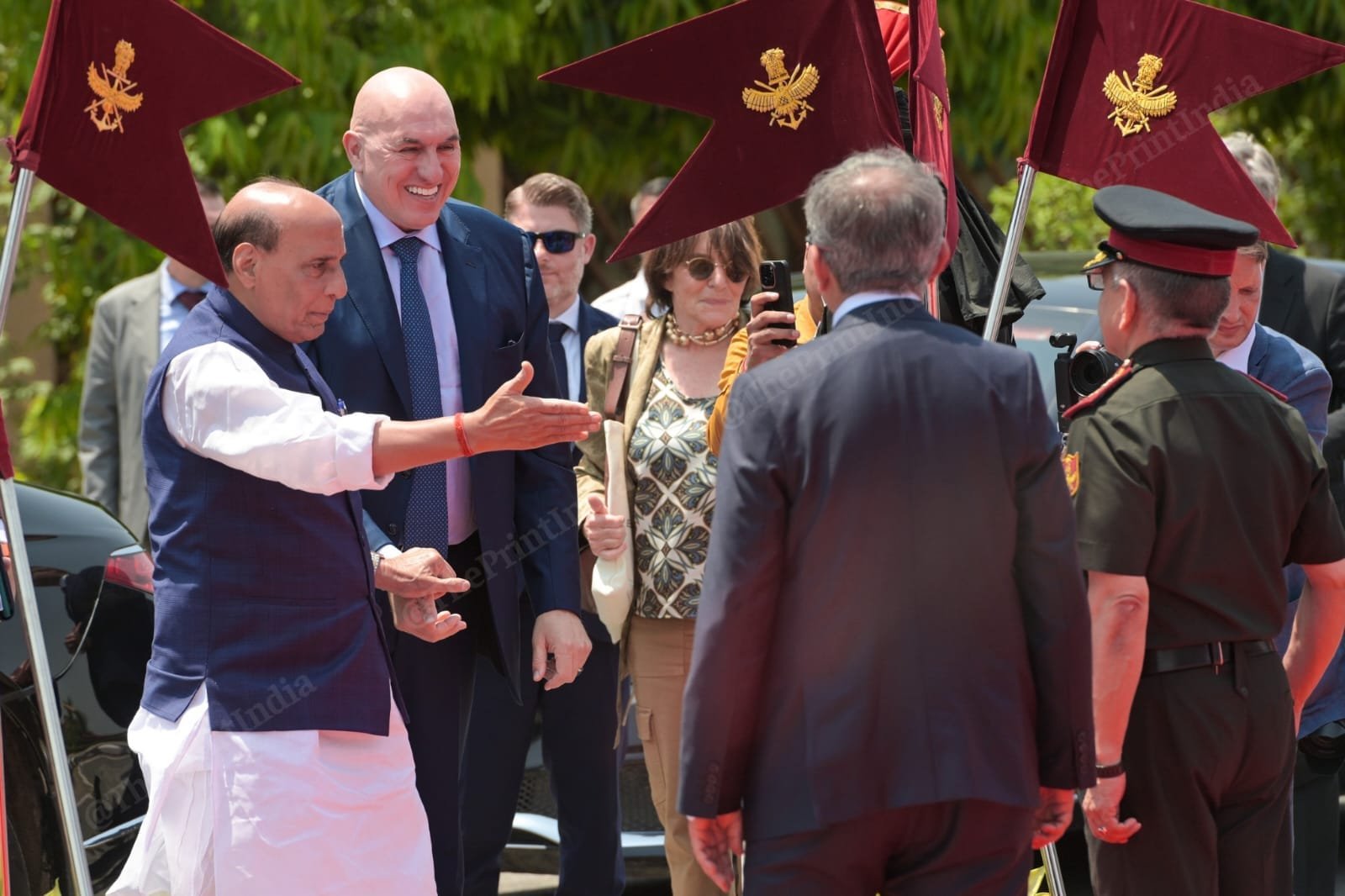
India Italy Defence Ties

Italian Defence Minister Guido Crosetto Honours Fallen Heroes at National War Memorial Italian Defence Minister Guido Crosetto arrived in New […]

Sea Buckthorn Benefits

Sea Buckthorn Juice: Daily Health Booster or Overhyped Trend? People are becoming more health-conscious today than ever. Sea buckthorn juice […]

Scroll to Top