

Artemis II Crew Returns to Houston After Historic Lunar Mission

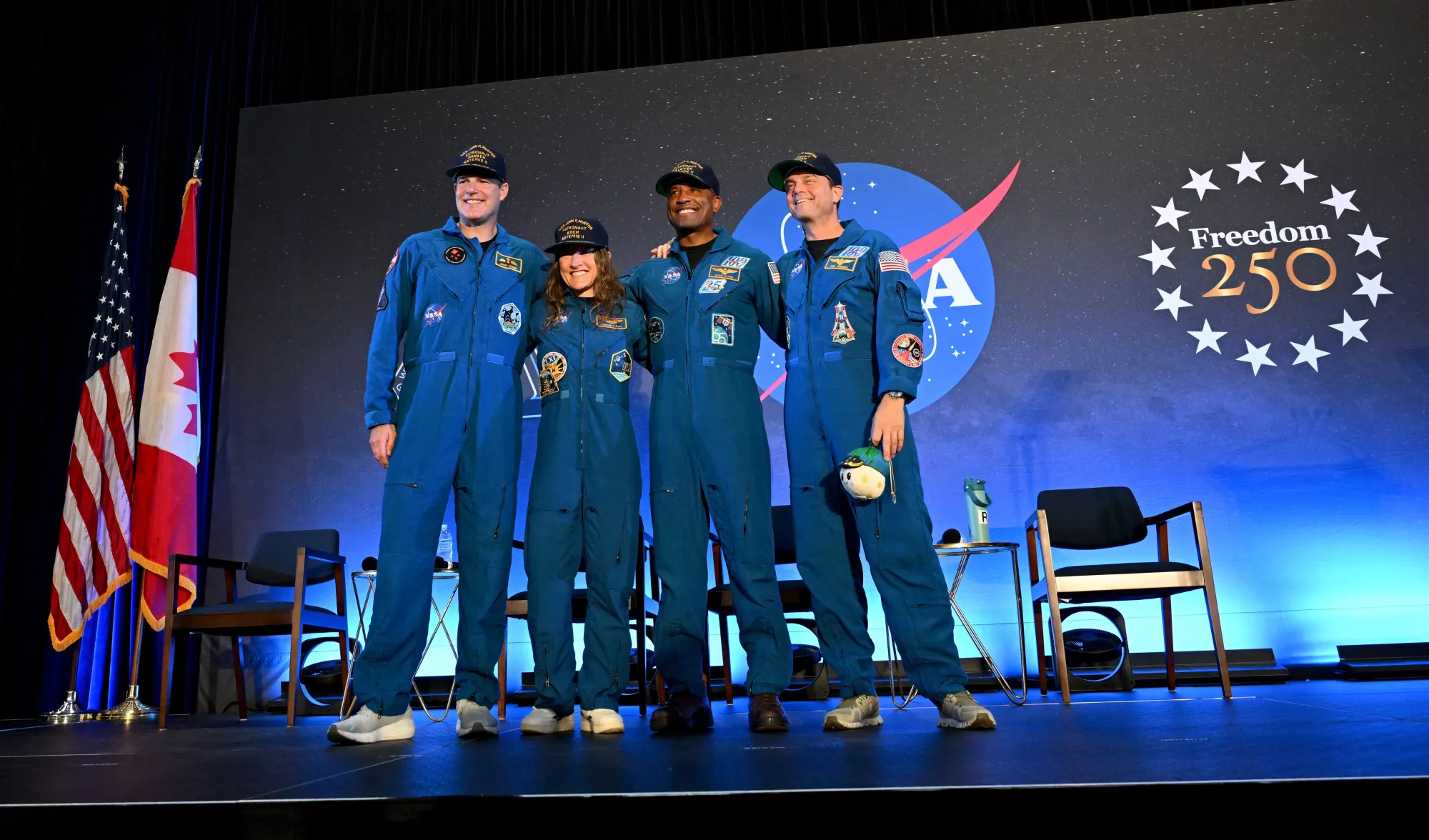
Artemis II Crew Returns Houston, the four-member crew of NASA’s Artemis II mission received a hero’s welcome at the Johnson Space Center on Monday, officially reuniting with their families after a historic 10-day journey around the Moon. Commander Reid Wiseman, Pilot Victor J Glover, Mission Specialist Christina Koch, and CSA (Canadian Space Agency) astronaut Jeremy Hansen arrived in Houston via NASA aircraft following their successful splashdown and recovery in the Pacific Ocean.

The mission, which lifted off on April 1, 2026, marked the first time humans have traveled to the lunar vicinity in over 50 years. During the flight, the crew reached a record-setting distance of 252,756 miles from Earth, providing critical data on the Orion spacecraft’s life support systems and performance in deep space. Now back on home soil, the astronauts will begin an intensive period of post-flight reconditioning, medical evaluations, and lunar science debriefs to pave the way for future surface landings.

The Journey Home: From Splashdown to Houston

The return to Earth was a high-stakes operation involving multiple branches of the U.S. military and NASA recovery teams.

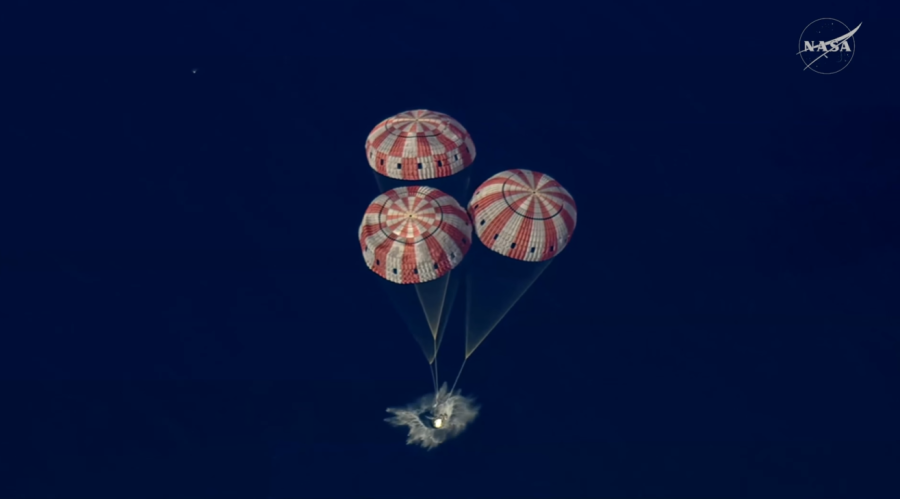
  • The Splashdown: Orion hit the Pacific Ocean off the coast of San Diego at 8:07 p.m. EDT on April 10, assisted by a three-main-parachute system.
  • The Recovery: U.S. Navy and Air Force teams extracted the crew via helicopters and transported them to the USS John P. Murtha.
  • Family Reunion: After initial medical checks at sea, the crew flew to Houston, where they were met with emotional reunions with friends, family, and the NASA workforce.
Artemis II Crew Returns Houston

Record-Breaking Lunar Flyby

Artemis II was more than a test flight; it was a mission of “firsts” for the modern era of space exploration.

  • The Distance: The crew traveled further from Earth than any human in history, reaching a peak altitude of 4,067 miles above the lunar surface.
  • The Duration: The nearly 10-day mission tested the limits of the Orion capsule’s heat shield, which endured temperatures of nearly 5,000°F during re-entry at 35 times the speed of sound.

The Crew: Christina Koch became the first woman and Jeremy Hansen the first non-American to travel to the lunar vicinity

Critical Re-entry Milestones

The final hours of the mission were a masterclass in precision engineering.

  • Separation: The Crew Module successfully separated from the Service Module at 7:33 p.m. on Friday, with the latter burning up harmlessly over the Pacific.
  • Blackout Period: The crew endured a planned six-minute communications blackout as plasma built up around the capsule during the most intense phase of atmospheric heating.

Parachute Deployment: Drogue parachutes deployed at 23,400 feet, followed by the main chutes at 5,400 feet, slowing the craft to a safe splashdown velocity

Artemis II Crew Returns Houston

Post-Mission Science and Reconditioning

While the flight is over, the work for Wiseman, Glover, Koch, and Hansen is just beginning.

  • Medical Evaluations: NASA doctors are closely monitoring the crew’s transition back to Earth’s gravity, assessing bone density, cardiovascular health, and “human performance” after deep-space exposure.
  • Data Retrieval: Engineers at the Kennedy Space Center will now examine the Orion capsule to retrieve onboard data and analyze the wear on the heat shield.
  • Lunar Debriefs: The astronauts will provide firsthand accounts of the spacecraft’s handling and the lunar environment to refine procedures for Artemis III.
The Path to Artemis III and Beyond

The success of Artemis II is the final green light required for NASA’s goal of returning humans to the lunar surface.

  • Testing Hardware: The mission confirmed that the Space Launch System (SLS) rocket and Orion spacecraft are ready for crewed operations.
  • Global Collaboration: The inclusion of the CSA highlights the international nature of the Artemis Accords, which aim to establish a sustainable human presence on the Moon.
  • Future Goals: This mission serves as a stepping stone for the Lunar Gateway station and eventual human missions to Mars.
Multimedia and Public Engagement

NASA has released a wealth of high-resolution imagery and video from the mission to inspire the “Artemis Generation.”

  • Multimedia Resources: The Artemis II Multimedia Resource Page features views of the lunar far side and “Earthrise” captured by the crew.
  • Streaming Success: The return coverage was broadcast live across major platforms including NASA+, Netflix, and Amazon Prime, drawing millions of viewers worldwide.


Author: M Jyosri

iPhone 17 Pro India

Apple Unveils iPhone 17 Pro: Vapour Chamber Cooling Meets A19 Pro Power Apple has officially pulled the curtain back on […]

BJP Unveils 'Sonar Bangla' Roadmap

BJP Unveils ‘Sonar Bangla’ Roadmap: 15-Point Manifesto Targets TMC Stronghold for 2026 Polls Union Home Minister Amit Shah officially launched […]

PM Modi Haldia Rally

“Syndicate-Driven” TMC Government Denies Bengal Basic Needs Like Fish: PM Modi in Haldia Launching a scathing attack on the Trinamool […]

Asha Bhosle Final Farewell Mumbai

Final Farewell: Mumbai Mourns as Legendary Asha Bhosle Laid to Rest A sea of humanity descended upon the streets of […]

China Strait of Hormuz Passage

China Urges Seamless Passage in Strait of Hormuz Amid Trump’s Blockade Threats The Chinese Foreign Ministry issued an urgent call […]

T20 World Cup

Bangladesh Exit T20 World Cup 2026 as ICC Impasse Deepens In a historic first for Bangladesh cricket, the nation will […]

Scroll to Top