
Conflict Escalates as Israel Launches Simultaneous Strikes in Tehran and Beirut
The conflict in West Asia intensified dramatically on Tuesday as the Israeli military announced “simultaneous strikes” on Tehran and Beirut, widening the theatre of war beyond Iran’s borders. The development comes amid escalating hostilities following the killing of Iran’s Supreme Leader Ayatollah Ali Khamenei over the weekend in joint U.S.–Israeli bombardment.
As explosions echoed across Tehran overnight, regional tensions deepened with attacks reported in Lebanon, Saudi Arabia and Bahrain. The United States Embassy in Riyadh confirmed it had come under drone attack, prompting a temporary closure and emergency advisory for American citizens.
Table of Contents
ToggleIsraeli Military Expands Offensive to Iran and Lebanon
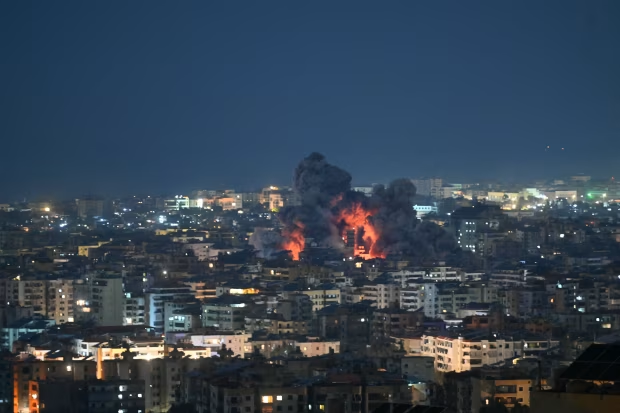
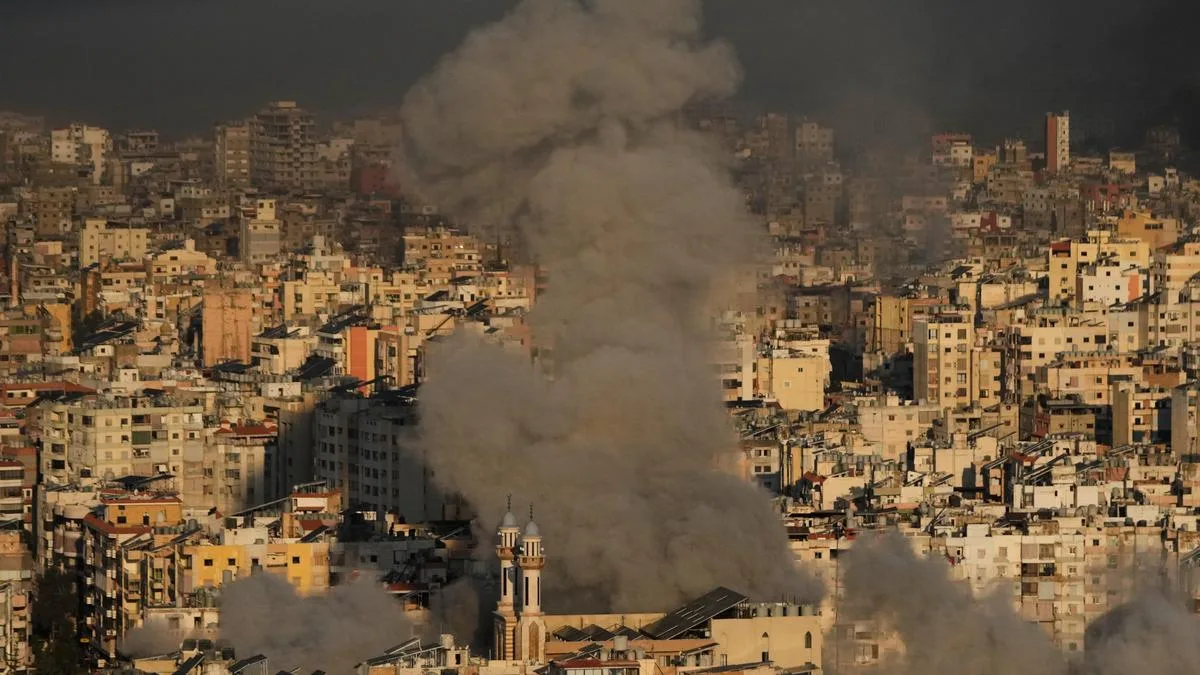
The Israel Defense Forces (IDF) said it was conducting targeted airstrikes against “military objectives of the Iranian terror regime and the Hezbollah terrorist organisation.” Simultaneous operations were launched in Tehran and Beirut, marking one of the most expansive phases of the conflict so far.
In Lebanon, Israeli forces issued evacuation warnings for dozens of locations, including neighbourhoods in southern Beirut, ahead of imminent military action. The military also confirmed troops were operating in southern Lebanon in what it described as a “forward defence posture” near the border, aimed at increasing security for northern Israeli residents.
Hezbollah, in response, claimed it targeted three Israeli military bases, including Ramat David air base and the Meron base, using drones.

U.S. Embassy in Riyadh Attacked, Diplomatic Presence Reduced
Saudi Arabia reported that two drones struck the U.S. Embassy compound in Riyadh, causing a limited fire and minor material damage. The embassy confirmed the attack and announced it would remain closed temporarily, urging American citizens to “shelter in place.”
U.S. President Donald Trump indicated that retaliation could follow “soon,” though he did not provide details.
In a broader precautionary measure, the U.S. State Department ordered non-emergency personnel and their families to depart Bahrain, Jordan and Iraq, and urged American citizens to leave more than a dozen West Asian countries via commercial means due to “serious safety risks.”
Iran’s Retaliatory Strikes and Regional Fallout
Iran’s Revolutionary Guards said they had targeted a U.S. air base in Bahrain in response to ongoing strikes. Iranian media also reported the deaths of five members of the Islamic Revolutionary Guard Corps (IRGC) in U.S.–Israeli attacks.
Meanwhile, Israeli forces claimed to have destroyed command posts of Iran’s Revolutionary Guards and dismantled the headquarters of Iran’s state broadcaster in Tehran.
The expanding conflict has raised fears of a prolonged regional war, with oil facilities and critical energy infrastructure also reportedly targeted. Brent crude prices rose sharply amid concerns over supply disruptions through the Strait of Hormuz.

Airspace Closures Leave Thousands Stranded
The war has triggered sweeping airspace closures across West Asia, severely disrupting international travel. Airspace over Iran, Iraq and Israel remains closed, while several Gulf nations have implemented temporary restrictions.
According to aviation analytics firm Cirium, nearly 13,000 flights out of 32,000 scheduled in the region since Saturday have been cancelled.
Multiple Indian airports, including Bengaluru and Kolkata, reported flight cancellations to destinations such as Dubai, Doha, Abu Dhabi and Riyadh. Emirates, Qatar Airways, Etihad and Air Arabia suspended operations on several routes.
Indian carriers have begun operating relief flights. IndiGo is running 10 special flights from Jeddah, while SpiceJet announced four evacuation flights from Fujairah in the UAE. Air India Express has restarted limited services to Oman.
Impact in India and South Asia
The escalating conflict has had ripple effects in India and neighbouring regions. The Central Board of Secondary Education (CBSE) postponed Class 10 and 12 examinations scheduled in West Asia due to safety concerns.
Several State governments, including Maharashtra and Jharkhand, have launched helplines for citizens stranded abroad. Jharkhand Chief Minister Hemant Soren urged the Centre to ensure the safe return of Indians in the region.
In Kashmir and parts of Jammu and Rajouri, protests were reported following Khamenei’s killing, prompting temporary restrictions and security measures.
The West Indies cricket team, in India for the T20 World Cup, also faced travel delays due to airspace restrictions.

Netanyahu Says War Will Not Be “Endless”
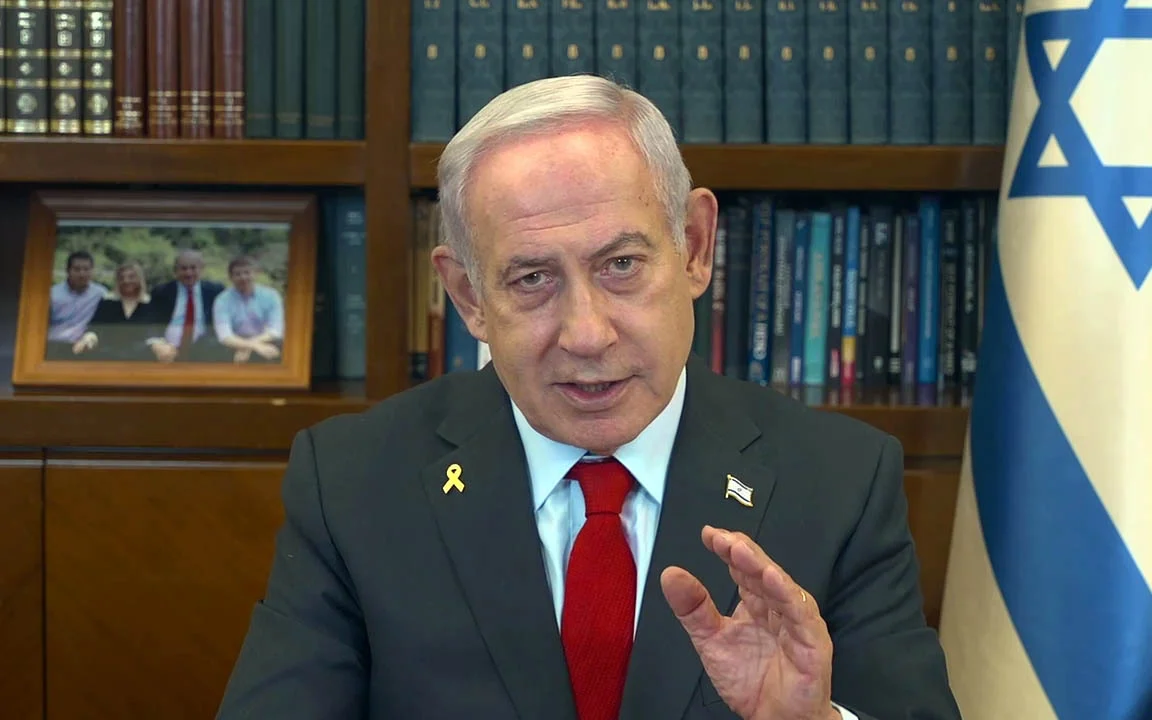
Israeli Prime Minister Benjamin Netanyahu said the war against Iran would not be an “endless” one, describing it as a decisive operation aimed at neutralising what he called imminent nuclear threats.
Speaking to U.S. media, Netanyahu claimed Iran had been constructing underground sites that would soon become immune to attack, creating urgency for military action.
President Trump echoed the stance, stating that the United States has the capability to sustain operations beyond the projected four-to-five-week timeframe if necessary.
A Conflict at a Defining Moment
With military strikes expanding across multiple fronts, diplomatic evacuations under way and markets reacting nervously, the Israel–U.S.–Iran conflict has entered one of its most volatile phases in recent history.
The coming days are expected to determine whether the situation stabilises through diplomatic channels or escalates further into a wider regional confrontation.
Global Markets React as Tensions Mount
Financial markets responded sharply to the intensifying conflict. Oil prices climbed for a third consecutive day, while gold extended gains as investors sought safe-haven assets.
Brent crude futures surged amid concerns over shipping routes in the Strait of Hormuz, a critical artery for global energy supplies.
Analysts warn that prolonged instability in West Asia could significantly disrupt global energy markets, trade flows and regional security architecture.
The conflict in West Asia intensified dramatically on Tuesday as the Israeli military announced “simultaneous strikes” on Tehran and Beirut, widening the …
Which 4 Major Women Schemes Launched by Droupadi Murmu?
President Droupadi Murmu on Monday launched four major women-centric welfare schemes of the Delhi Government at a special programme titled “Sashakt Nari, …
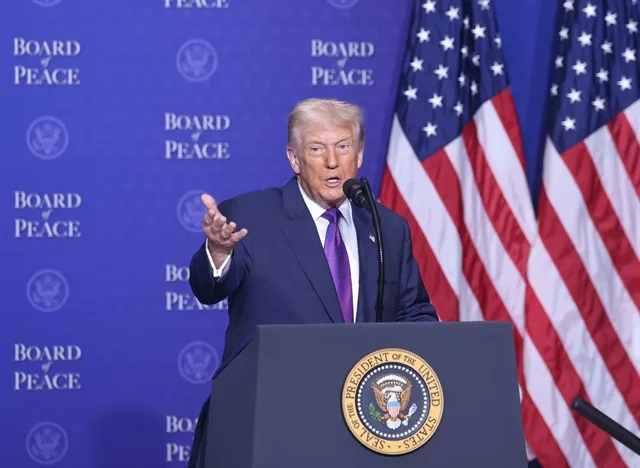
Gaza Peace Board First Meeting Sees India Steps In as Observer
Gaza Peace Board First Meeting Sees India Steps In as Observer India on Thursday attended the inaugural meeting of US […]
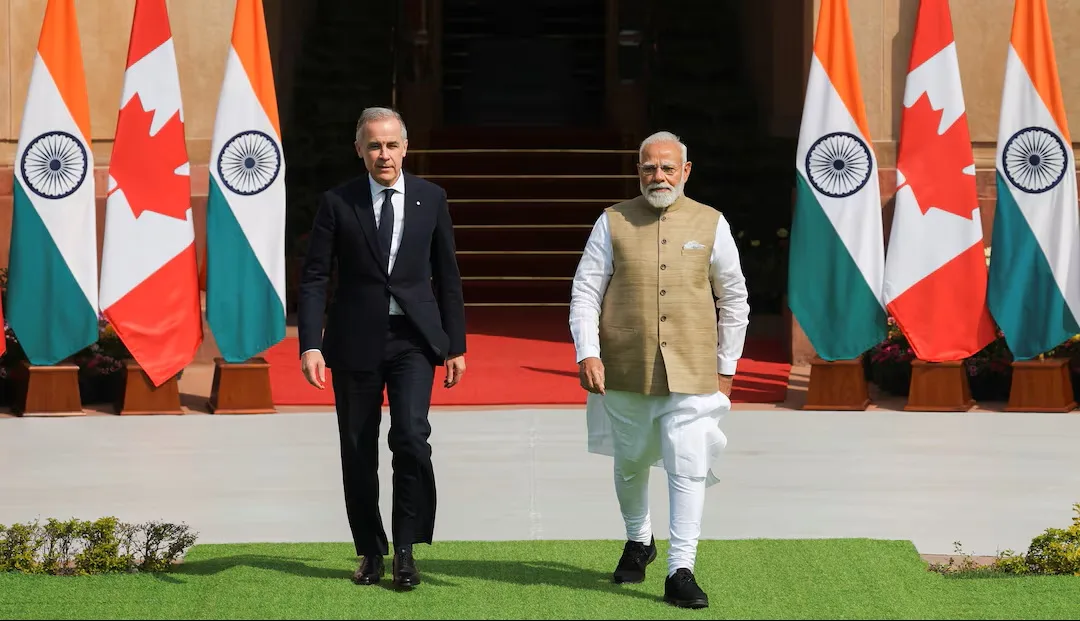
India and Canada Turn the Page with Historic Uranium Deal and Bold Trade Push India Canada agreed to a series […]

England Seal Semis Spot While New Zealand Face Fight for Survival
England Seal Semis Spot While New Zealand Face Fight for Survival The Super 8 stage of the ICC T20 World […]

India Target Crucial Win Against Zimbabwe to Strengthen Net Run Rate and Semifinal Hopes
India Target Crucial Win to Strengthen Net Run Rate and Semifinal Hopes The Super Eight race has reached boiling point. […]


