
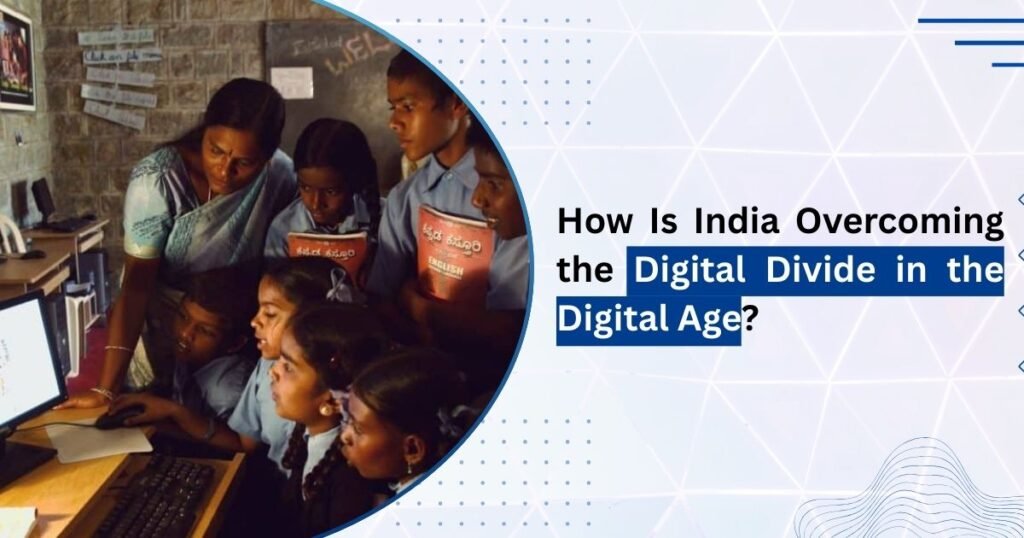

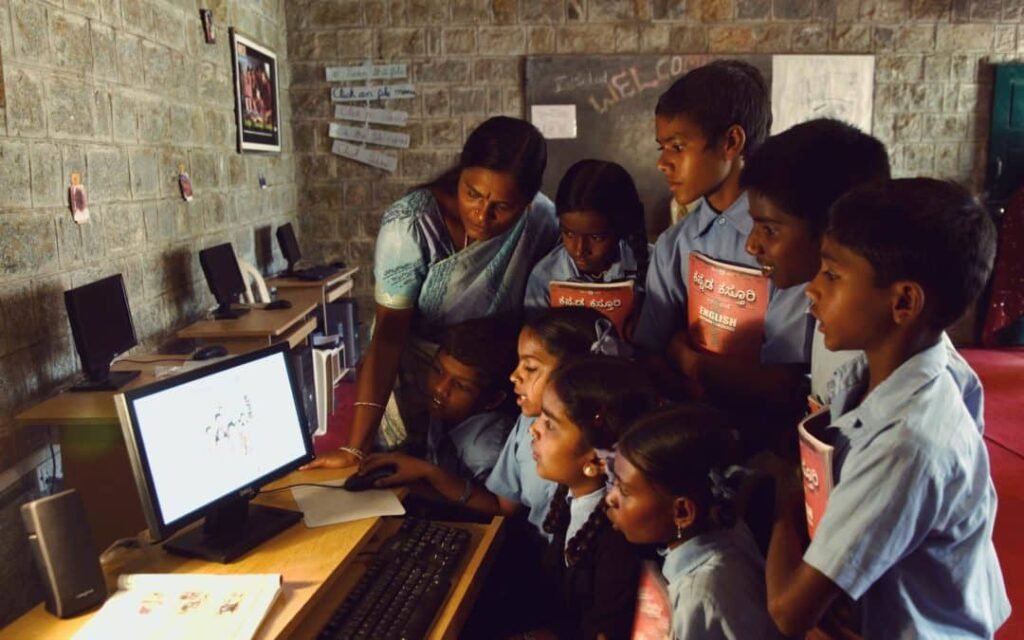
Bridging the Digital Divide: India Empowering Bharat in the Digital Age
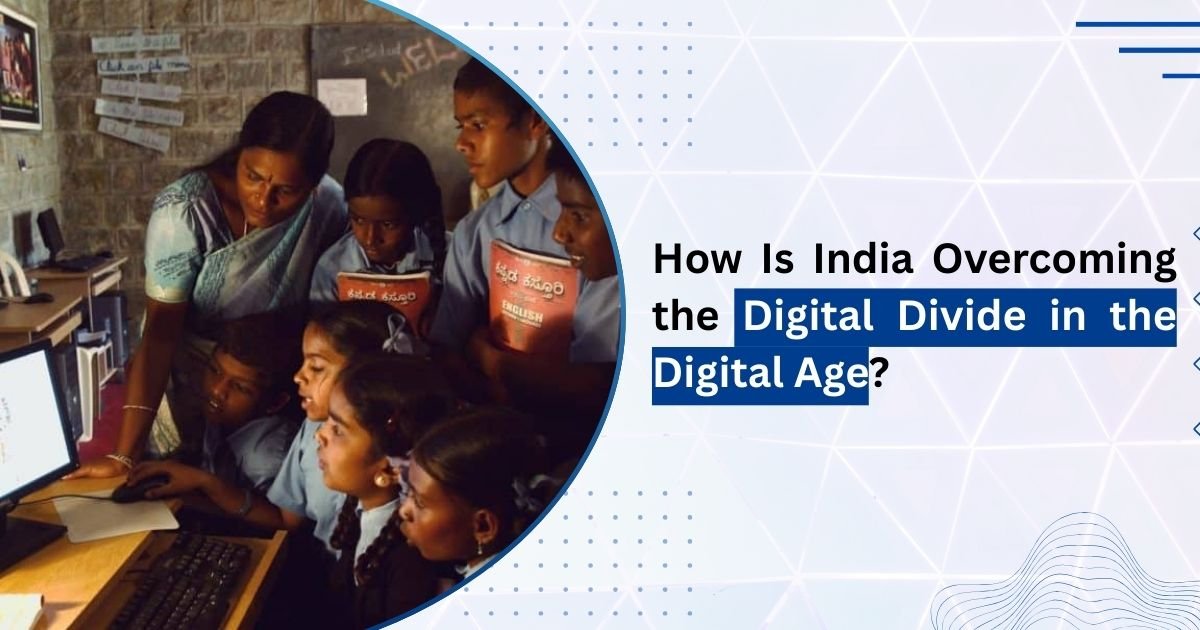
India’s digital transformation is rapidly narrowing the digital divide and empowering millions of citizens across the country. Driven by the Digital India Programme, the government has built one of the world’s largest digital ecosystems, enabling citizens to access services, education, and economic opportunities online.
Launched in 2015, the initiative aims to make digital infrastructure a core utility for every citizen, deliver governance and services on demand, and empower people through digital access. Over the past decade, India has significantly expanded connectivity, particularly in rural and remote regions.
Table of Contents
ToggleExpanding Digital Infrastructure Across the Nation
A key component of India’s digital push is the expansion of broadband connectivity under BharatNet. As of early 2026, more than 2.15 lakh Gram Panchayats have been connected with high-speed internet.
The country has also witnessed rapid growth in optical fibre infrastructure, expanding from 19.35 lakh route km in 2019 to 42.36 lakh route km in 2025. This expansion has strengthened connectivity between urban and rural areas.
At the same time, India’s fast rollout of 5G technology has covered 99.9% of districts, supported by over 5.18 lakh Base Transceiver Stations.

Affordable Internet Driving Digital Inclusion
Affordable data prices have played a crucial role in expanding internet usage. Mobile data costs have dropped dramatically from ₹269 per GB in 2014 to around ₹8–10 per GB in 2025–2026, making India one of the cheapest data markets globally.
As a result, broadband subscriptions have crossed 1 billion users, compared to just 13.15 crore users a decade ago. This surge in connectivity has enabled citizens to access welfare schemes, digital payments, and online education.
Digital Public Infrastructure Transforming Services
India’s Digital Public Infrastructure (DPI) forms the backbone of digital governance. Platforms such as Aadhaar, Unified Payments Interface, and DigiLocker have made government and financial services accessible to millions.
- Aadhaar has issued over 143 crore digital identities.
- UPI processes nearly ₹28.33 lakh crore in transactions every month.
- DigiLocker has more than 62 crore registered users, allowing secure storage of official documents.
These platforms are improving financial inclusion and enabling citizens to access services without paperwork.

Boosting Research Through High-Performance Computing
India is also investing in advanced computing infrastructure under the National Supercomputing Mission. So far, 38 supercomputers with a combined capacity of 44 petaflops have been deployed across institutions.
The country’s government cloud platform MeghRaj supports more than 2,170 ministries and departments, enabling secure digital governance.
Promoting Digital Literacy and Education
To ensure citizens can effectively use digital services, the government has launched several digital literacy initiatives.
The Pradhan Mantri Gramin Digital Saksharta Abhiyan has trained over 6.39 crore individuals in rural areas, making it one of the world’s largest digital literacy programmes.
Digital learning platforms such as DIKSHA and SWAYAM are providing accessible education through online courses, digital textbooks, and teacher training resources.

Expanding Last-Mile Access Through Service Centres
More than 6.5 lakh Common Service Centres (CSCs) are operating across the country, providing assisted digital access in rural areas. These centres allow citizens to access government services, banking, and digital payments without needing personal devices or advanced digital skills.
Another key initiative, PM-WANI, has deployed over 4.09 lakh public Wi-Fi hotspots, improving affordable internet access across villages and towns.
Digital Innovation and Startup Growth
India’s digital ecosystem is also encouraging innovation and entrepreneurship. The Startup India programme has supported the growth of over 2 lakh recognised startups, creating around 21 lakh jobs.
Innovation programmes such as Atal Innovation Mission are nurturing young innovators through 10,000 Atal Tinkering Labs, engaging more than 1.1 crore students in technology and innovation projects.
Toward an Inclusive Digital Future
India’s digital transformation has moved beyond connectivity to focus on capability building and economic participation. Through initiatives in connectivity, digital public infrastructure, digital literacy, and innovation, the country is building a robust and inclusive digital ecosystem.
Officials say these initiatives are ensuring that rural communities, women, students, farmers, and marginalised groups are able to participate fully in the digital economy.
As India continues to invest in technology, experts believe the country is emerging as a global model for inclusive digital development, ensuring that no citizen is left behind in the digital age.
Is Gen Z Backed Balen Shah the Next Prime Minister of Nepal?
Is Gen Z Backed Balen Shah the Next Prime Minister of Nepal? Nepal’s political landscape is witnessing a dramatic shake […]
Which 4 Major Women Schemes Launched by Droupadi Murmu?
Which 4 Major Women Schemes Launched by Droupadi Murmu? President Droupadi Murmu on Monday launched four major women-centric welfare schemes […]
India and Canada Turn the Page with Historic Uranium Deal and Bold Trade Push India Canada agreed to a series […]

The conflict between Israel and Iran intensified on Monday as Israel announced it had begun wide-scale strikes targeting locations in Tehran, Isfahan …
India’s digital transformation is rapidly narrowing the digital divide and empowering millions of citizens across the country. Driven by the Digital India …
Is Gen Z Backed Balen Shah the Next Prime Minister of Nepal?
Is Gen Z Backed Balen Shah the Next Prime Minister of Nepal? Nepal’s political landscape is witnessing a dramatic shake […]


