
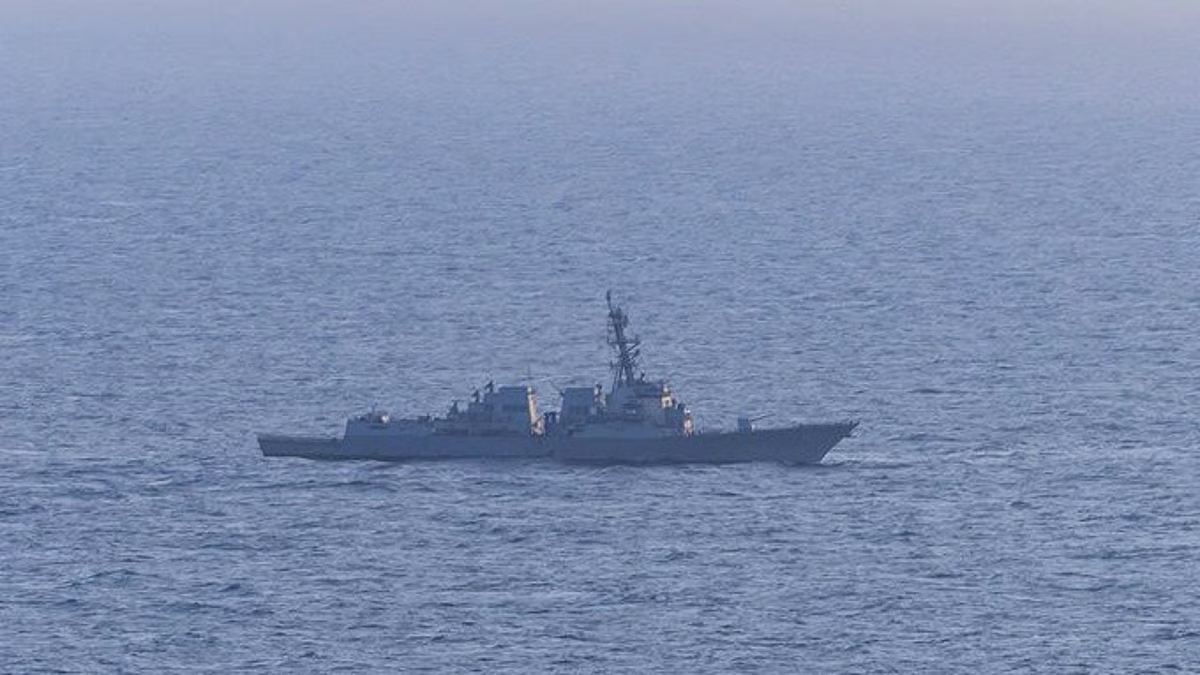

Tehran Warns of "Dangerous Consequences" as U.S. Implements Total Naval Blockade

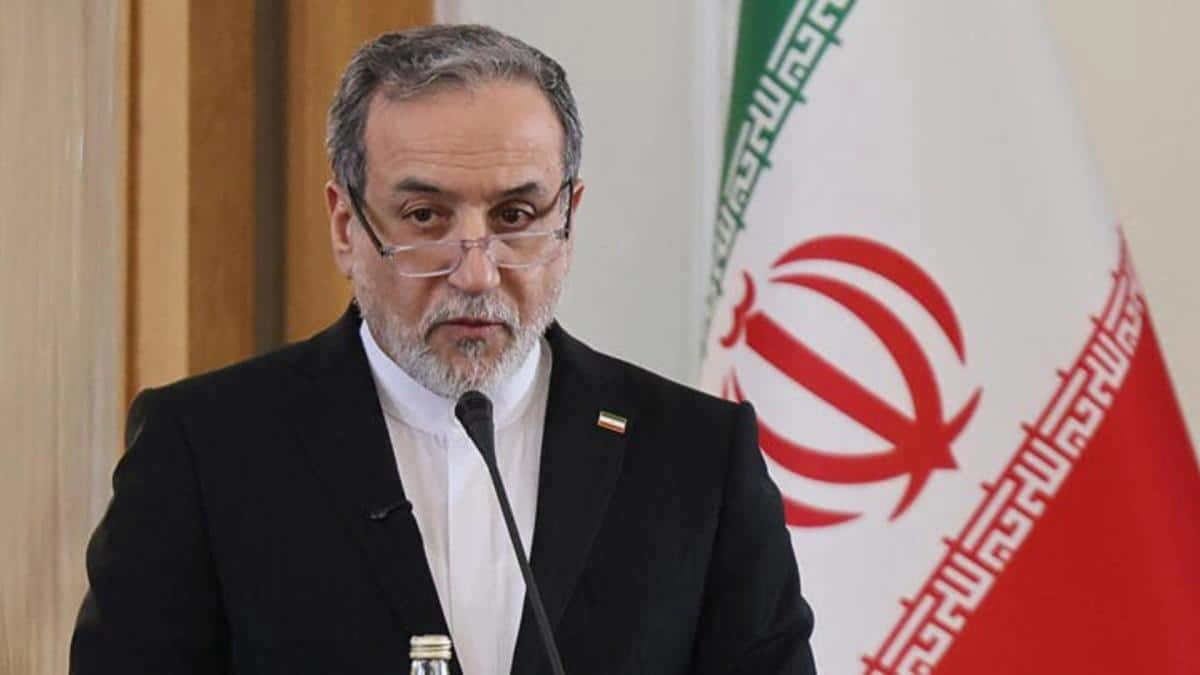
TEHRAN, IRAN – Iranian Foreign Minister Seyyed Abbas Araghchi has issued a stark warning regarding the “dangerous consequences” of the United States’ military actions in the Persian Gulf, following the successful implementation of a comprehensive naval blockade on Iranian ports. In high-level diplomatic calls with his counterparts in China and Japan on Wednesday, Araghchi characterized the blockade as an act of aggression that threatens to shatter the fragile stability of West Asia.

The warning comes as U.S. Central Command (CENTCOM) officially announced that its forces have achieved “maritime dominance” across the Strait of Hormuz and the Persian Gulf. According to CENTCOM Commander Admiral Brad Cooper, U.S. forces effectively halted all maritime trade entering and leaving Iranian territory within a 36-hour window. This move has escalated regional tensions to their highest point since the April 8 ceasefire, drawing sharp criticism from Tehran’s strategic allies.

Araghchi’s Warning: Provocation in the Persian Gulf

In a televised statement via IRIB, the Iranian Foreign Ministry detailed Araghchi’s concerns over the intensifying U.S. naval presence.

  • Fragile Ceasefire: Araghchi noted that the U.S. blockade directly undermines recent diplomatic engagements intended to end hostilities in the region.
  • Dangerous Consequences: Tehran warned that “provocative positions” by Washington will lead to a “more complicated situation,” hinting at potential retaliatory measures if the maritime siege continues.
  • UNSC Friction: Araghchi dismissed a U.S.-backed resolution at the UN Security Council regarding the Strait of Hormuz as “irrational and unilateral.”
US Blockade Iranian Ports

The Beijing-Tehran-Moscow Axis

During a phone call with Chinese Foreign Minister Wang Yi, Araghchi expressed gratitude for the unified stance of China and Russia against U.S. interests.

  • Sino-Russian Support: Araghchi credited Beijing and Moscow’s opposition at the UN for preventing an even swifter escalation of military conflict.
  • Wang Yi’s Response: The Chinese Foreign Minister praised Iran’s “resistance and self-confidence” and reiterated that China remains ready to facilitate diplomatic efforts to stabilize the region.
  • Coordinated Diplomacy: This call aligns with recent meetings between Russian FM Sergey Lavrov and Wang Yi in Beijing, forming a strategic front against the U.S. blockade.

CENTCOM’s "Maritime Dominance" Operation

The U.S. military has moved with unprecedented speed to secure the world’s most critical energy chokepoint.

  • 36-Hour Lockdown: Admiral Brad Cooper confirmed that U.S. naval assets have successfully blocked all commercial and military traffic from Iranian ports.
  • Strategic Control: CENTCOM forces now maintain a constant presence in the Strait of Hormuz, effectively controlling the flow of goods to and from the Islamic Republic.
  • The Goal: Washington maintains the blockade is necessary to prevent arms aid and funding for regional proxy groups, though Tehran views it as a “war imposed by the United States and the Zionist regime.”
US Blockade Iranian Ports

Diplomatic Outreach to Japan

Araghchi also engaged with Japan’s Foreign Minister Toshimitsu Motegi to discuss the economic fallout of the maritime disruption.

  • Economic Consequences: The two leaders discussed how the insecurity in the Strait impacts global supply chains, specifically regarding oil exports to East Asia.
  • Responsibility: Araghchi urged Japan and other global powers to adopt a “responsible approach” to prevent the situation from spiraling into a wider war.
  • Japan’s Stance: Motegi expressed deep concern over the blockade and offered Japan’s assistance in mediation to ensure regional stability.
The Strait of Hormuz: A Flashpoint for War

The strategic waterway has become the center of a global geopolitical tug-of-war.

  • Attribution of Insecurity: Iran asserts that any “insecurity” in the waterway is a direct result of U.S. and Israeli aggression.
  • Blockade Legality: Tehran has labeled the U.S. actions as a violation of international maritime law, while the U.S. maintains its right to secure international waters against “state-sponsored threats”.
Regional Fallout and the May Summit

The escalation in the Persian Gulf adds immense pressure to upcoming international summits.

  • Xi-Trump Summit: The blockade is expected to be a primary point of contention during the rescheduled meeting between Presidents Xi Jinping and Donald Trump in mid-May.

Energy Prices: Global markets are bracing for a spike in crude oil prices as the total halt of Iranian exports begins to impact the global supply.

Regional Fallout and the May Summit
MilestoneDate / TimeStatus
CENTCOM Blockade LaunchApril 14, 2026Operation Commenced
Total Port Lockdown AchievedApril 15, 202636-Hour Goal Met
Araghchi-Wang Yi CallApril 15, 2026Diplomatic Protest
CENTCOM Official BriefingApril 16, 2026Dominance Confirmed
BJP Unveils 'Sonar Bangla' Roadmap

BJP Unveils ‘Sonar Bangla’ Roadmap: 15-Point Manifesto Targets TMC Stronghold for 2026 Polls Union Home Minister Amit Shah officially launched […]
PM Modi Haldia Rally

“Syndicate-Driven” TMC Government Denies Bengal Basic Needs Like Fish: PM Modi in Haldia Launching a scathing attack on the Trinamool […]
Iran Shuts Hormuz

Ceasefire on the Brink: Iran Shuts Strait of Hormuz as Israel Unleashes Largest Strike in Lebanon The fragile 14-day truce […]

Ayushmann Khurrana and Sara Ali Khan

Bollywood Power Pair: Ayushmann Khurrana and Sara Ali Khan Team Up for ‘Udta Teer’ In an exciting update for Hindi […]
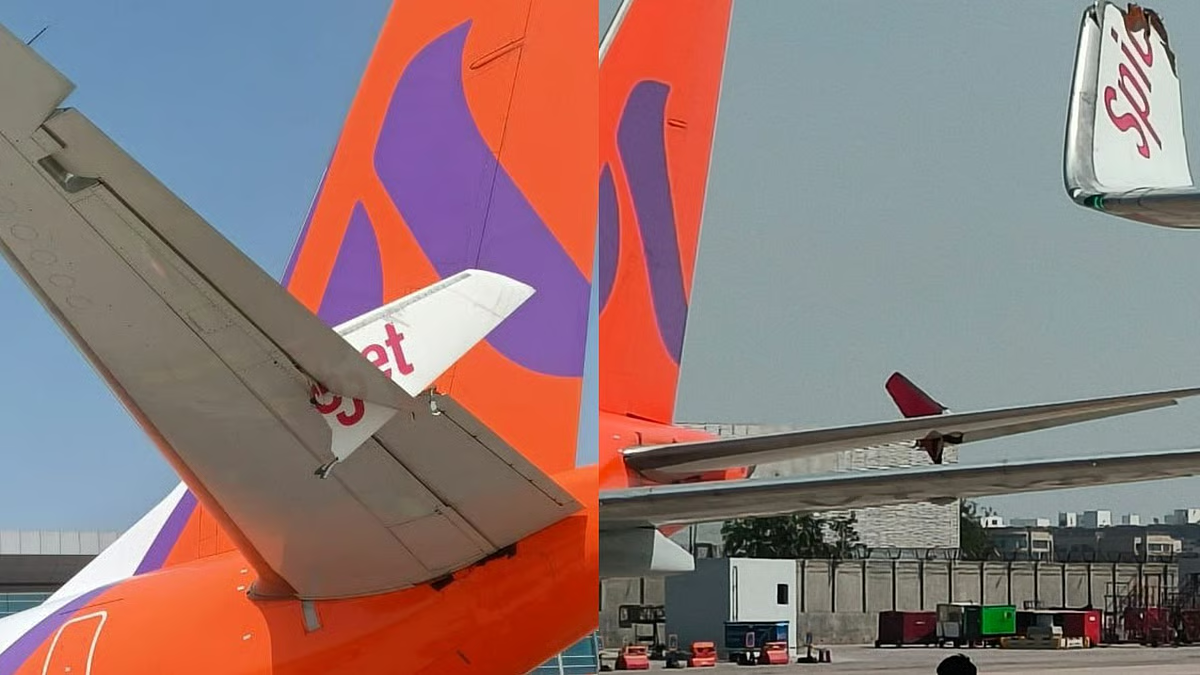
Delhi Airport Plane Collision

Ground Collision at IGI: SpiceJet Wing Clips Stationary Akasa Air Plane NEW DELHI – A significant ground mishap occurred at […]

MI vs PBKS IPL 2026

MI vs PBKS IPL 2026: Unbeaten Kings Storm Wankhede as MI Fights for Survival The “City of Dreams” prepares for […]

Scroll to Top