
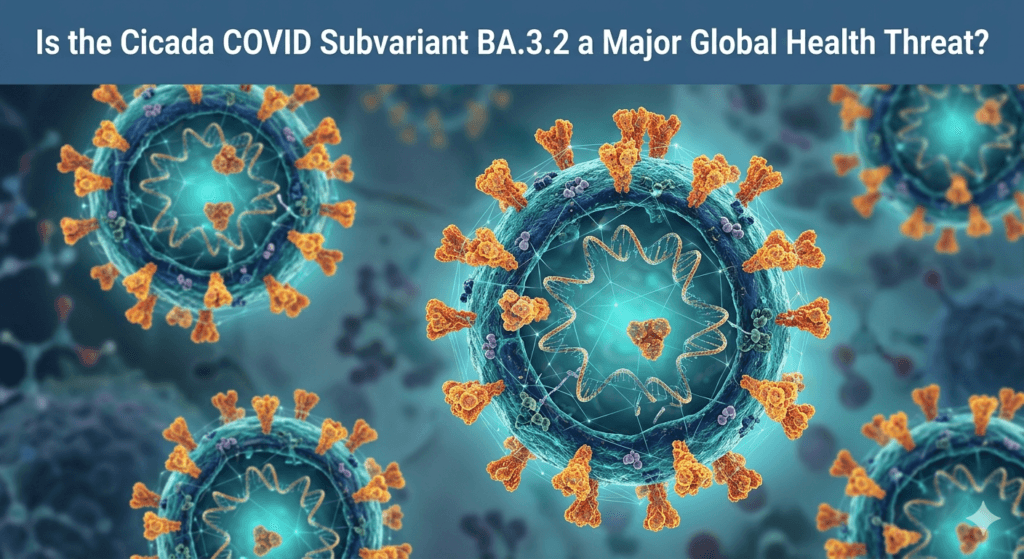


Cicada COVID Subvariant BA.3.2: Should You Be Worried About This Fast-Spreading New Strain?
The global health community is closely monitoring a newly identified Omicron offshoot—BA.3.2, informally known as the “Cicada” COVID subvariant. First detected in late 2025, this variant has rapidly spread across multiple countries, raising concerns about its impact and behavior.
But how serious is it really? Here’s a clear breakdown.
Table of Contents
ToggleWhat Is the Cicada COVID Subvariant BA.3.2?
BA.3.2 is a highly mutated subvariant of Omicron, carrying more than 70 mutations in its spike protein, which plays a key role in how the virus infects human cells.
- The variant was first detected in South Africa before gradually spreading to multiple regions across the world.
- It has now been identified in over 20 countries, indicating a steady international presence.
- Health authorities have classified it as a “Variant Under Monitoring,” meaning it is being observed closely but is not yet a major concern.
- Global agencies are tracking its movement through wastewater analysis and international traveler screening systems.

Is BA.3.2 Dangerous or Harmful?
Current evidence suggests that BA.3.2 is not highly dangerous for the general population, although it does spread efficiently.
- Most reported infections are mild to moderate, with symptoms similar to earlier Omicron waves.
- There has been no significant increase in hospitalizations or deaths linked specifically to this variant so far.
- Healthcare systems in affected regions continue to function normally without unusual pressure.
- However, the variant spreads more easily, increasing the likelihood of wider outbreaks.
- It also shows a higher tendency to reinfect individuals who have had COVID-19 before.
Key Symptoms to Watch Out
Doctors have identified a distinct symptom pattern associated with BA.3.2, with some signs appearing more prominently than in earlier variants.
Most common symptom
- A severe and painful sore throat is frequently reported as the earliest and most noticeable symptom.
Respiratory symptoms
- Patients often experience a runny or blocked nose along with a persistent dry cough that may last for several days.
General symptoms
- Fever, chills, fatigue, and muscle aches are commonly reported, often making the illness feel similar to seasonal flu.
Less common symptoms
- Some individuals may develop mild breathing difficulty, particularly those who are unvaccinated or belong to high-risk groups.

Why Experts Are Paying Attention
The high number of mutations in BA.3.2 is the primary reason why scientists and health agencies are monitoring it closely.
- These mutations may allow the virus to partially escape immunity developed from previous infections.
- The variant may also reduce the effectiveness of existing vaccines in preventing mild infections.
- However, vaccines continue to provide strong protection against severe illness, hospitalization, and death.
- This balance between higher spread and lower severity is a key factor in current risk assessment.
Who Should Be More Careful?
While the general population may experience mild illness, certain groups remain more vulnerable and should take extra precautions.
- Older adults, especially those above 65, face a higher risk of complications if infected.
- Pregnant individuals are advised to monitor symptoms carefully and consult a doctor if needed.
- People with weakened immune systems are more likely to experience reinfection or prolonged illness.
Precautions You Should Take
Even though the situation is not alarming, following basic preventive measures can significantly reduce the risk of infection.
- Regular handwashing and maintaining hygiene remain simple but effective ways to prevent transmission.
- Individuals experiencing symptoms, especially a severe sore throat, should stay home to avoid spreading the virus.
- Avoiding close contact with vulnerable individuals can help protect those at higher risk.
- Medical advice should be sought if symptoms persist or worsen over time.
Global Situation: Where Does It Stand?
The spread of BA.3.2 is being tracked globally, with data indicating steady but manageable transmission.
- The variant has been detected across 25 U.S. states through surveillance systems.
- It has been identified in wastewater samples, indicating community-level spread.
- Cases have also been found among international travelers, confirming cross-border movement.
- Despite its spread, hospitals worldwide have not reported any significant strain on resources.
Final Verdict: Cause for Panic or Just Caution?
At this stage, BA.3.2 does not appear to pose a major global threat, but it does require attention.
- The variant spreads quickly, making it important to stay cautious.
- Most infections remain mild, reducing the risk of severe outcomes.
- Vaccines continue to provide strong protection against serious illness.
Author: M Jyosri
5 High-Protein Breakfast Recipes for Weight Loss and All-Day Energy
Starting your day with a sugar-heavy cereal or just a cup of coffee is like trying to drive a car on an …

Sesame Seeds: The Tiny Powerhouse with 8 Times More Calcium Than Milk When you think of calcium, a tall glass […]

Walking vs Gym: Unlock Effective Weight Loss After 40
Walking vs Gym: Unlock Effective Weight Loss After 40 Losing weight after 40 can feel more challenging than it used […]

Punjab Kings vs Gujarat Titans 2026 Mullanpur Match Analysis and Team Blueprints The wait for the 19th edition of the […]

The Central Board of Secondary Education has officially announced the CTET Result 2026 on its dedicated portal, ctet.nic.in. This announcement follows the …

How Cyclone Narelle Turned the Australian Sky Blood Red?
How Cyclone Narelle Turned the Australian Sky Blood Red? The residents of Shark Bay, Western Australia, awoke this past Friday […]


