
A groundbreaking innovation is on the horizon as a tiny Indian computer—no larger than a credit card—is set to help scientists detect faint signals from the universe’s earliest days. Developed as part of the PRATUSH mission, this credit-card-sized single-board computer (SBC) could unravel mysteries from the “Cosmic Dawn,” the era when the first stars were born.
What Is the PRATUSH Mission?
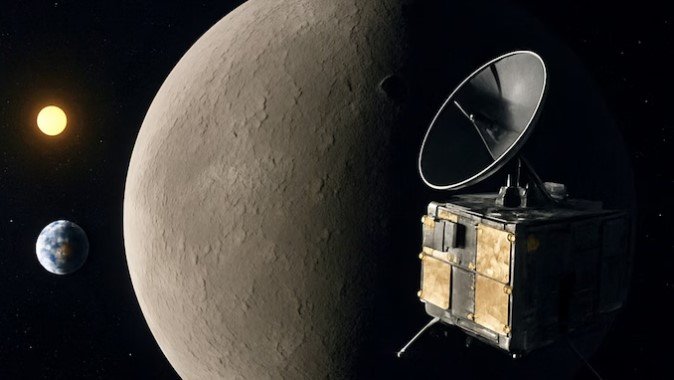
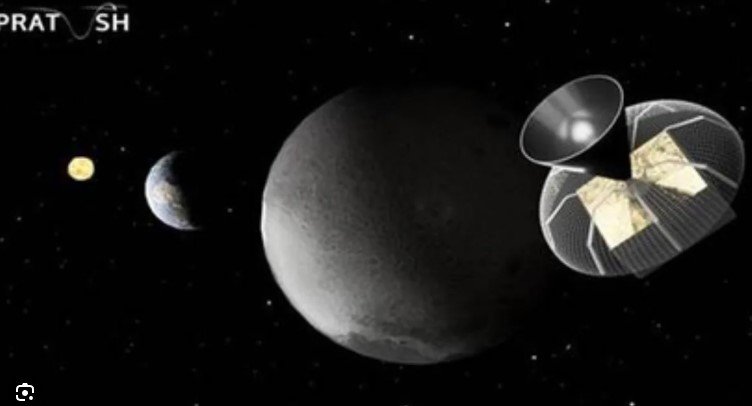
The PRATUSH mission is a visionary space payload concept that aims to orbit the Moon’s far side—the quietest radio environment in the inner Solar System. Unlike Earth, where radio signals and atmospheric interference create noise, the lunar far side offers a pristine setting to listen to faint cosmic whispers.
The mission’s goal is to detect the elusive 21-cm radio signal emitted by hydrogen atoms. This signal holds vital clues about how the first stars and galaxies formed, offering a rare glimpse into the universe’s early evolution.
The Role of the Tiny Indian Computer
At the core of the mission lies a compact single-board computer, inspired by Raspberry Pi technology. Despite its small size, this computer is the master controller for the radiometer system, which includes:
The antenna for collecting hydrogen radio waves
An analog receiver to process signals
An FPGA chip for high-speed data handling
This tiny Indian computer ensures smooth operation by managing data acquisition, coordinating subsystems, running calibrations, and maintaining performance—all within strict size, weight, and power limits essential for space missions.
High Sensitivity for Faint Signals
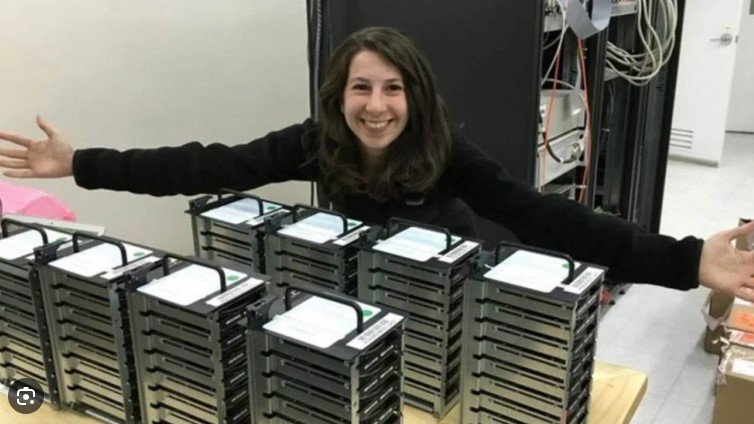
Space experiments demand extreme sensitivity, and tests have shown that the PRATUSH digital receiver system excels in this area. The receiver powered by the SBC reduces noise to just a few millikelvins across hundreds of observation hours.
This remarkable performance allows scientists to detect signals that are usually drowned out by Earth-based interference—signals from the Cosmic Dawn, the period when the universe’s first luminous objects began to shine.
Why the Moon’s Far Side?
The choice of the Moon’s far side is deliberate. On Earth, radio signals from satellites, mobile phones, and broadcasting networks overwhelm the faint hydrogen signals. The ionosphere also distorts incoming low-frequency waves.
The lunar far side, however, is shielded from Earth’s noise, creating the ideal listening post for early-universe research. From this vantage point, the PRATUSH mission can “hear” signals that no ground-based telescope can detect.
Future Upgrades and Space-Qualified Hardware
While current tests use prototype systems, future versions will include space-qualified components designed for reliability in extreme conditions. Planned enhancements will boost sensitivity, precision, and data integrity.
These upgrades could expand the scope of the mission, making the tiny Indian computer a powerful enabler of cost-effective space exploration.
A Step Toward Affordable Space Science
Traditional space missions rely on large, resource-heavy hardware. By contrast, the PRATUSH approach demonstrates how low-power, high-capability single-board computers can drastically reduce costs and complexity.
This makes it possible for smaller nations, research groups, and collaborations to participate in advanced space science, leveling the playing field in astronomy and cosmology.
The Cosmic Dawn: What We Hope to Learn
By capturing the faint 21-cm radio signal, PRATUSH could answer fundamental questions about the universe’s birth and evolution:
How did the first stars ignite and transform cosmic hydrogen?
When did the first galaxies form?
How did radiation from early stars shape the cosmos?
Could these signals reveal new physics beyond current models?
Each piece of data will help fill gaps in our understanding of cosmic history.
India’s Growing Role in Space Exploration
This mission highlights India’s growing capabilities in innovative space technologies. From the Chandrayaan lunar program to affordable launch vehicles, India has shown how cost-effective approaches can achieve global impact.
The use of a tiny Indian computer in deep-space cosmology research is another example of how smart engineering and minimalism can push the boundaries of science.
Final Thoughts
In essence, a tiny Indian computer is preparing to lead one of the most ambitious cosmic experiments ever attempted. By orbiting the Moon’s far side and listening for the faint whispers of hydrogen from the early universe, PRATUSH could illuminate the story of how the cosmos came to be.
What makes this even more inspiring is the approach—compact, affordable, and innovative. If successful, PRATUSH won’t just detect ancient cosmic signals; it will prove that small-scale technology can make a giant leap for humanity’s understanding of the universe.