
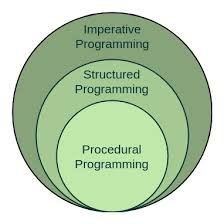
Structured programming represents a programming paradigm that is extensively embraced, focusing on clarity, quality, and efficiency in development. This approach was first introduced in the 1960s to enhance the readability, maintainability, and reliability of code. Through the implementation of a well-defined structure comprising blocks, control statements, and subroutines, structured programming has profoundly impacted contemporary software development methodologies.
What is Structured Programming?
Structured programming is a programming methodology that emphasizes dividing a program into smaller, manageable components through the use of clearly defined control structures, including sequence, selection (decision-making), and iteration (loops). The primary objective is to enhance the ease of understanding, debugging, and modifying programs. This concept is closely linked to top-down design, wherein the entire program is segmented into smaller units (modules or functions), each tasked with a specific function. These units are subsequently developed independently and integrated to create a comprehensive application.
Origins and Background
The concept of structured programming originated in the late 1960s, significantly shaped by Dutch computer scientist Edsger W. Dijkstra, who was a strong proponent of abolishing the goto statement, which complicated code readability and maintenance. His renowned paper, “Go To Statement Considered Harmful” (1968), is regarded as a pivotal moment in the advancement of structured programming.
Prior to the advent of structured programming, software was frequently developed in an unstructured manner, often referred to as “spaghetti code, ” characterized by the excessive use of goto statements that obscured the program’s logic. Structured programming resolved this issue by promoting a more systematic and rational methodology for program design.
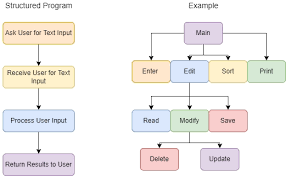
Fundamental Principles of Structured Programming
1) Sequence
The most basic type of control structure, sequence, denotes the execution of statements in a linear fashion, one following the other. This represents the standard behavior in the majority of programming languages.
For instance:
x = 10
y = 20
sum = x + y
print(sum)

2) Selection (Decision-Making)
Selection incorporates decision-making functionality into the program. The most frequently used selection statements include if, if-else, and switch.
Example:
if score >= 50:
print(“Passed”)
else:
print(“Failed”)
3) Iteration (Loops)
Iteration enables specific sections of the code to be executed multiple times depending on a condition. This encompasses for, while, and do-while loops.
Example:
for i in range(5):
print(“Hello”)
4) Modularity
Structured programming advocates for the implementation of modules, functions, or procedures to break down intricate programs into smaller, reusable components. This approach fosters code reuse and enhances organization.
Example:
def calculate_area(radius):
return 3.14 * radius * radius
print(calculate_area(5))

- Enhanced Readability: Structured programs are more straightforward to read and comprehend due to their logical structure and modular design. This facilitates both the creation of new code and the interpretation of existing code.
- Simplified Debugging and Testing: Thanks to small, independent modules and well-defined control structures, errors can be identified and resolved more swiftly. Unit testing becomes more feasible.
- Improved Maintainability: Modifications in one section of the program are less likely to impact other sections. This division of responsibilities simplifies maintenance over time.
- Code Reusability: Functions or modules created once can be utilized in other programs, minimizing redundancy and conserving time.
- Promotes Best Practices: Structured programming inherently encourages developers to adhere to sound coding practices such as meaningful naming conventions, appropriate indentation, and uniform formatting.
Languages that Facilitate Structured Programming
The majority of contemporary programming languages either fully or partially endorse structured programming. Notable examples include:
- C
- Pascal
- Python
- Java
- Ada
- C++
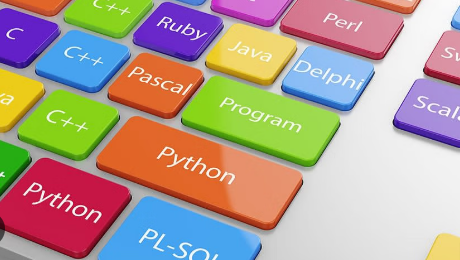
While several of these languages also accommodate object-oriented or functional programming paradigms, they fundamentally integrate structured programming principles.
Structured Programming vs. Unstructured Programming
Feature | Structured Programming | Unstructured Programming |
| Control Flow | Uses structured control flow (if, for, while) | Often relies on goto statements |
| Modularity | Encourages modularity with functions | Typically, monolithic code blocks |
| Readability | High readability and maintainability | Difficult to read and debug |
| Scalability | Easy to scale and modify | Hard to manage large programs |
| Error Handling | Easier to trace and fix bugs | Errors are harder to locate and resolve |
Structured Programming in Practical Applications
Structured programming transcends theoretical frameworks; it is actively utilized in the realm of software development. Examples include:
- Embedded Systems: Where both performance and reliability are of utmost importance.
- System Software: This encompasses compilers, operating systems, and interpreters.
- Educational Tools: These are employed in introductory programming courses to impart logic and discipline.
- Business Applications: Structured logic frequently underpins data processing and workflow management.
Even when other paradigms, such as object-oriented programming (OOP), are implemented, the principles of structured programming are often incorporated to establish a coherent logical foundation.
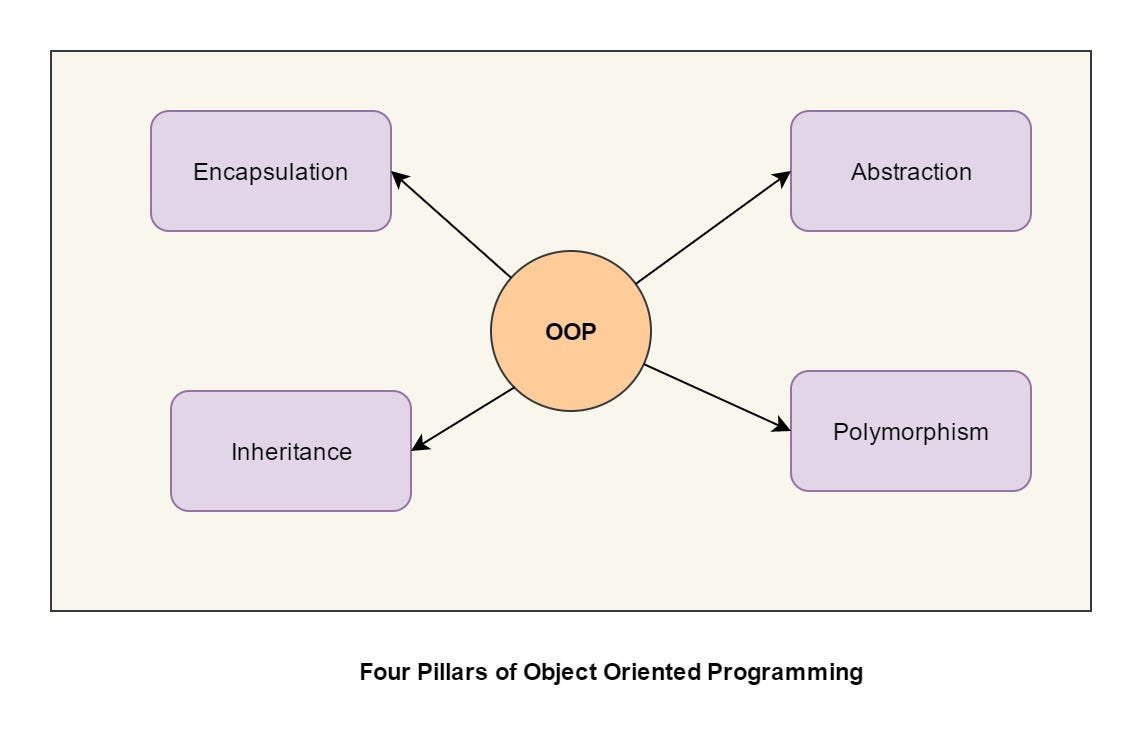
Although structured programming offers numerous benefits, it is not free from criticism. Some contend that it may be excessively rigid for specific software types, especially large-scale or highly dynamic applications. Consequently, alternative paradigms such as object-oriented and functional programming have become more popular to meet more intricate requirements.
Nevertheless, even these contemporary paradigms are founded on the principles of structured programming. For instance, object-oriented programming frequently incorporates structured logic within class methods.
Conclusion
Structured programming has transformed the methodology of software development by implementing a systematic and disciplined coding approach. Its focus on control structures, modularity, and readability has established it as a cornerstone of contemporary programming practices. Regardless of whether you are developing a minor script or a comprehensive software system, grasping and utilizing the principles of structured programming can result in cleaner, more efficient, and more maintainable code. In spite of the rise of newer paradigms, structured programming continues to be a fundamental concept that every programmer ought to master.