
From the Classroom to the Community: Teaching Sustainability in Action
The idea of sustainability in action is about more than theory, it is about living the values of responsibility, care for the environment, and mindful choices in daily life. With challenges such as climate change, pollution, and waste growing every day, it has become important to show students how their learning can be applied beyond the classroom. Schools are not only places of knowledge, they are also spaces where habits, values, and attitudes are shaped for life.
By connecting lessons to community projects and encouraging thoughtful decision-making, educators can bring about sustainability in action. This approach helps students understand the link between their studies and the real world, while empowering them to become active contributors to positive change.
Table of Contents
ToggleIntegrating Sustainability in Action into the Curriculum
For students to truly value sustainable living, schools need to bring sustainability in action into everyday lessons. When concepts are linked with real-life issues, they become easier to understand and apply.
Listed below are some ways in which educational institutes can incorporate sustainability into the curriculum:

- Make lessons relevant to local problems: Students should learn about climate change, waste, or resource use in the context of their own community. For instance, discussing water shortages or pollution nearby helps them connect personally with the idea of sustainability in action.
- Include sustainability across subjects: Learning should be made practical. Math classes can calculate carbon footprints, science can explore how human activities affect ecosystems, and social studies can highlight the social and economic side of sustainable living. Even arts and literature can help students express ideas on sustainability in action
- Encourage problem-solving and analysis: Sustainability challenges are often complex. Students should be encouraged to think critically, look at different perspectives, and suggest solutions.
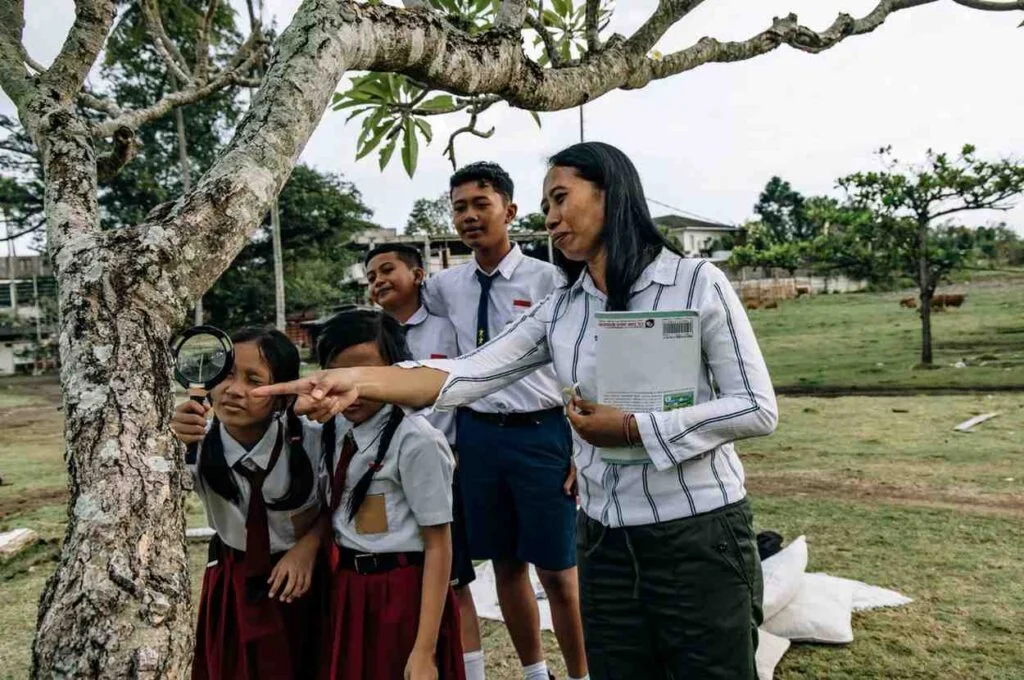
- Use varied teaching methods: Students learn best through hands-on work, research or discussions. Activities like experiments, field trips, or group projects make sustainability in action engaging for all.
Engaging Students in Community Projects
Classroom lessons become more meaningful when students can apply them in the real world. Community projects allow young people to practice sustainability in action while seeing the difference their efforts make.
Listed below are some ways in which engaging students in community projects can incorporate the idea of sustainability in action:
- Find out what the community needs: Schools can work with local organizations or residents to identify problems, such as poor waste management or lack of green spaces.
- Encourage student-led initiatives: When students take the lead, they develop responsibility and leadership. Clean-up drives, tree planting, school gardens, or recycling campaigns are practical ways to put sustainability in action.
- Work with the community: Involving local people, businesses, and groups makes projects more effective and creates shared responsibility. Students also learn the value of teamwork and civic participation.

Promoting Responsible Choices and Ethical Living
Learning about sustainability in action is not complete without talking about everyday choices.
Learn how schools can guide students to think carefully about how their actions affect the environment and society.
- Talk about the ethics of choices: From waste disposal to over-consumption, students should reflect on how decisions shape the world around them. For instance, exploring the effects of fast fashion can highlight environmental damage and poor labor conditions.
- Encourage mindful habits: Simple actions like reusing materials, saving energy, and choosing sustainable products can create lasting habits. Schools can promote eco-friendly days or challenges that bring sustainability in action into daily routines.
- Build global awareness: Students should see themselves as global citizens. Small actions, such as conserving water or reducing plastic, are steps toward addressing larger global challenges.
Bringing sustainability in action from the classroom to the community helps students emerge as problem-solvers, leaders, and responsible citizens. They learn that protecting the planet and building fairer societies is not just a subject, it is a practice that must be lived.
When students carry these lessons into their homes, neighborhoods, and future careers, the impact multiplies by manifold times. They inspire others, influence policies, and build lifestyles that place sustainability at the center.
In this way, teaching sustainability in action prepares young people not just for exams, but for life as a whole. It shows them that their knowledge has power, their actions have meaning, and together they can shape a future that is healthier, fairer, and more sustainable for all.
The Rise and Fall of Michael Carroll: A Lottery Winner’s Journey
The Rise and Fall of Michael Carroll: A Lottery Winner’s Journey In 2002, Michael Carroll’s life dramatically transformed when he […]
The Effect of Organic Farming on Climate Change
The Effect of Organic Farming on Climate Change From lowering greenhouse gas emissions to building resilience against extreme weather events, […]
Kids and Nutrition: Why Healthy Eating Habits in Kids Matter Early
Kids and Nutrition: Why Healthy Eating Habits in Kids Matter Early Children learn by watching, tasting, and repeating. From their […]
Plant-Based Power: Nutrition Benefits of Going Green
Plant-Based Power: Nutrition Benefits of Going Green Adopting a plant-based diet is more than a personal health choice, it is […]
From Farm to Plate: Understanding the Food–Nutrition Connection
From Farm to Plate: Understanding the Food–Nutrition Connection We often focus on what we eat, but rarely think about where […]
Role of Nutrition: Preventing Diabetes & High Blood Pressure
Role of Nutrition: Preventing Diabetes & High Blood Pressure Diabetes and high blood pressure are two of the most common […]