
Donald Trump Semiconductor Tariffs: Will Indian Auto Sector Feel the Heat?
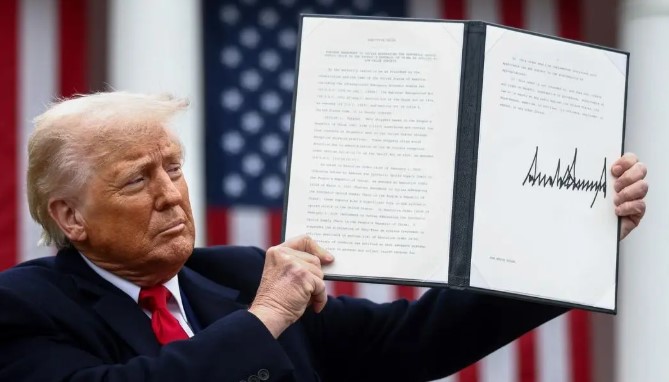
US President Donald Trump’s semiconductor tariff announcement is poised to shake global trade once again. On August 5, Trump stated that new tariffs on semiconductors and pharmaceutical products could be rolled out within a week. As global markets brace for impact, India’s auto sector, heavily reliant on imported chips, could face significant ripple effects.

Rising Tariffs and India's Exposure
India has already been grappling with steep 25% US tariffs imposed recently, with Trump threatening to raise them further due to India’s continued purchase of Russian oil. Now, with the proposed Donald Trump semiconductor tariffs, the country's large auto industry finds itself in a vulnerable position. While India is not a major semiconductor exporter, its automobile sector is a major semiconductor consumer, especially in the growing EV space.
Semiconductor Shortage: A Reopened Wound?
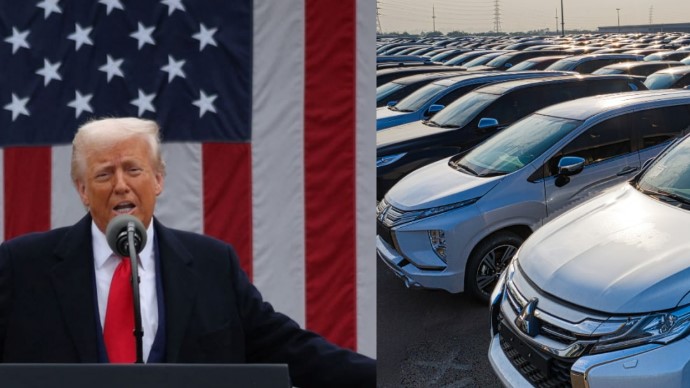
The Indian auto industry, including passenger, commercial, and electric vehicles, is deeply dependent on semiconductor imports. Even a minor disruption in chip availability can result in supply chain delays and increased production costs.

“The Indian automotive sector is particularly exposed due to its full dependence on imported semiconductors,” said Justin Khoo, Senior Market Analyst – APAC at VT Markets. His sentiment echoes industry fears of another wave of chip shortages, like the one that led to the loss of 300,000 units in FY24.
Table of Contents
ToggleElectric vehicles (EVs) stand to suffer the most, with nearly twice the semiconductor content compared to traditional vehicles. Components such as EV controllers, battery management systems, and infotainment modules rely heavily on chips that may now become costlier or harder to procure.
Exporters Under Pressure
India’s auto exports have surged — up 19% to 5.3 million units in FY24-25, per SIAM (Society of Indian Automobile Manufacturers). However, exporters with US exposure may be forced to reassess their outlook.
Prashanth Tapse, Senior VP Research at Mehta Equities, warns, “Auto OEM exporters to the US may come under pressure if the proposed Donald Trump semiconductor tariffs trigger a rise in input costs or disrupt global supply chains.”
Stocks like Sona BLW, Bharat Forge, and Samvardhana Motherson may feel the heat due to their dependence on US markets and chip imports. Even Tata Motors, through its UK-based Jaguar Land Rover (JLR) brand, could experience indirect impact from rising supply chain costs.
The Contra View: Limited Direct Impact?
Not all experts agree. Dr. Vikas Gupta, CEO & Chief Investment Strategist at OmniScience Capital, suggests the Indian auto sector may escape the worst.
“India is not a major exporter of semiconductors, and tariffs on US imports won’t directly affect Indian manufacturers,” he said. Dr. Gupta encourages investors to focus on domestically driven firms with low US exposure.
He further advises sticking to companies with:
Strong balance sheets
Competitive moats
Large domestic growth potential
Attractive valuations
This, he argues, offers a safer route amid rising geopolitical and trade risks.
Long-Term Concerns Linger
Even if the immediate Donald Trump semiconductor tariffs don’t directly apply to Indian exports, the secondary impact on chip prices and availability remains a genuine concern. A disruption in global semiconductor supply affects manufacturing timelines, costs, and even innovation, especially for EVs and smart mobility solutions.
The Nifty Auto Index, already down 3% over the past year, reflects this uncertain climate, driven by demand swings, commodity volatility, and now, fresh geopolitical shocks.
Conclusion
The announcement of Donald Trump’s potential semiconductor tariffs has global industries on alert. While India may not be the primary target, its auto sector — especially electric vehicle manufacturers and exporters — may face collateral damage through price hikes and supply disruptions.
Investors, policymakers, and automakers alike will be watching the coming days closely. With the Indian auto sector’s reliance on global chip supply, staying agile and focusing on domestic resilience could be the best way forward.
GG Face UPW as Playoff Stakes Rise in the WPL Race
Momentum is the most chased yet least owned currency in cricket. It cannot be stored, defended, or borrowed. It is earned moment …

IND vs NZ T20I: Intense Power Clash Sets the Tone Tonight
History is rarely kind to the timid. It rewards those bold enough to challenge the order and those strong enough to defend …

DC vs MI WPL 2026 High Stakes Rivalry Lights Up Vadodara
The Women’s Premier League 2026 returns with a marquee clash as Delhi Capitals and Mumbai Indians face off in Vadodara on Tuesday …

RCB vs GG WPL 2026: A High-Stakes Battle Awaits Tonight
RCB vs GG WPL 2026: A High-Stakes Battle Tonight The Women’s Premier League 2026 is beginning to take shape, and […]

MI W vs UP W WPL 2026 Live Match 8: Mumbai Indians Face UP Warriorz Tonight
MI W vs UP W WPL 2026 Live Match 8: Mumbai Indians Face UP Warriorz Tonight Mumbai Indians Women (MI […]
PSLV Mission Draws Attention After In-Flight Observation
India’s Polar Satellite Launch Vehicle (PSLV) experienced an unexpected development during its latest mission on Monday, as the PSLV rocket deviated from …


